Showing posts with label social issues. Show all posts

Monday, April 27, 2009

Pandemic time?

Tomorrow I will return to the Bush lexicon—today I have a more pressing issue to discuss: swine flu. Until a few days ago, the term was virtually unheard of, but now the threat of a global swine flu pandemic is all over the media. There are a few key questions about the possibility of a pandemic that I would like to address today.

First, what are the chances of swine flu becoming a global pandemic? The answer depends on two factors: how well we can contain the virus, and how contagious it is. It is already obvious how quickly disease can spread as a result of air travel—cases of swine flu have already been confirmed in the US, EU, and New Zealand. However, if hospitals follow adequate sanitation procedures, it is possible to prevent the disease from spreading to everyone. As far as the contagiousness of the virus goes, I believe we will just have to wait and find out—it will probably take a week at least for scientists to analyze the virus. But what is the bottom line? Are we headed for a pandemic? I believe the answer may be yes. We have already seen cases of swine flu all over the world, and there are undoubtedly more people infected than meets the eye.

Already several countries are attempting to close their doors to prevent the spread of this disease, such as Japan, China, Malaysia, and Indonesia, who have banned pork imports from Mexico and the US. Other countries will probably begin following in their footsteps, cutting off air travel to the Western Hemisphere. However, I believe that these efforts are mostly futile—in today’s world, it is almost impossible to completely isolate any one country from the rest of the world. Without a doubt, the swine flu will eventually enter these nations if it hasn’t already—between air, land, and sea travel, it is far to impractical to keep everyone out of a country.

Next—and perhaps most important—are we ready? Thankfully, I think the answer is “yes” here too. Over the past few years the world has been stocking up on anti-flu supplies in preparation for the expected bird flu epidemic, and we certainly have large quantities of anti-viral medicines like Tamiflu. However, we do lack a vaccine for swine flu as of right now, but that is not too much of a concern. Of course, this does not mean that we do not have to take action if swine flu becomes a pandemic, but we will not have to worry about the fall of civilization. As always, Third World countries will have a higher mortality rate than developed countries, and there may be serious issues in African countries if swine flu reaches there.

China will probably suffer the worst—it possesses several highly concentrated population centers—Beijing, Shanghai, and Hong Kong—that lack first-class healthcare or measure to contain the spread of disease. How the Chinese government will react to this new threat will be interesting indeed.

So, to summarize: I am not worried. Though swine flu may turn into a pandemic, the world is not unprepared for it. We can only watch and wait for further developments. 

Thursday, April 16, 2009

1776 in 2009 (part 2)

Nowhere is the issue of Americans longing for 1776 more present than in the issue of gun control. Gun-toting Americans see gun control laws as an offense to the men of 1776, who proudly carried guns and respected others’ rights to do so. However, regardless of whether gun control is justified, it is important to note that things have changed considerable since 1776, so the argument that “it’s what the Founding Fathers wanted” is not as valid as it seems.

The first difference between 1776 and today that relates to gun control is the fact that the reason people need guns is different. In 1776, society was more agrarian, less industrial, and more of a “pioneer culture.” In colonial times guns were not only helpful to deter crime, but also necessary for survival. Guns were essential for hunting, protection against robbers or invading Indians, and many other uses. Because of this, the way people viewed gun control in 1776 was very different from today: back then, t would have seemed far more tyrannical to take away people’s guns than it does now. 

Next, remember that in 1776 guns were very different than they are now. At the time of the American Revolution the best weapons were primitive flintlock muskets, and pistols could only fire one shot. Today, though, we have a wide variety of extremely deadly firearms, from handguns to high-powered rifles to automatic weapons. These make it possible for a single person to kill many other people quickly and easily, which is a concept that simply didn’t exist in the Founding Fathers’ time. 

However, there is one fundamental aspect of gun control that has not changed since 1776: gun control can act as a deterrent to crime. Similar to the way the fear of Mutually Assured Destruction (MAD) deters nuclear war, guns can prevent crime by acting as an equalizer. Today, pro-gun and conservative politicians often cite this effect as justification for less gun control.

So, what can this tell us about the issue of gun control? One thing is clear: preserving the right to bear arms simply because “the Founding Fathers would want it” is an absurd an invalid argument. So much has changed technologically and societal since 1776 that the principles behind the 2nd Amendment are radically different today. However, there is still some merit to the 2nd Amendment as a deterrent to crime. Also, from a libertarian perspective the problem changes only superficially—since libertarians believe that the preservation of civil liberties is the most important thing, the social issues surrounding guns are irrelevant. From are more practical perspective, though, these issues must be taken into consideration. Also, think about this: even if less gun control would deter crime, what sort of weapons should be banned? Should automatic weapons be allowed? What about assault rifles or explosives? I’ll leave it to my readers to decide for themselves.

Monday, April 6, 2009

A “nuclear-free world” (part 2)

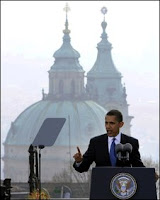
Now I would like to move on to what President Obama means by the phrase “nuclear-free world.” In a recent speech, he outlined his dream of a future in which no nation possesses nuclear weapons, making war obsolete. However, I am not so sure that this would be as idyllic of a future as Obama makes it seem. Also, I doubt that what Obama is suggesting is even possible.

First, I will address the issue of whether a world without nuclear weapons is desirable. Obviously it is in our benefit to prevent terrorists, belligerent nations, or unstable nations from building nuclear weapons, and preventing certain countries from having nuclear weapons would be a good idea. If fewer nations, or none at all, have atomic weapons, it is much more difficult for terrorists to obtain them. However, it would not be impossible for them to do so, as the knowledge required to make nuke still exists. It is certainly possible for a nation or group to build nuclear weapons without help from other countries, as North Korea proves. A nation that possesses nuclear weapons has enormous leverage over other nations, and in a non-nuclear world this means that any nation can simply build nukes and become a world power. Granted, Obama is also stressing missile defense systems, but these systems are far from perfect, and technologies to allow missiles to bypass these systems are being developed as fast as the systems themselves.

Also, remember that nuclear weapons are a deterrent to war. During the Cold War, neither side went to war because of the fear of MAD, or mutually assumed destruction. Today, the same scenario exists, which is the reason that no large-scale nuclear war has ever occurred. If nuclear weapons were taken away, there are fewer disincentives from waging conventional war on others. Take WWII, for example—Germany believed that it could win the war in Europe, so it invaded its neighbors mercilessly. However, if other nations had nuclear weapons, Germany probably would have never attacked, since a conventional attack would result in an un-winnable nuclear war. Indeed, the idea of a nuclear war with “acceptable” casualties ended long ago, in the early days of the Cold War. Since then, most people realize the futility of trying to launch a pre-emptive strike, nuclear or non-nuclear. However, if nuclear weapons were removed from the scenario, the result would change—nations could attack each other more easily, as there are no nukes to level the playing field.

Granted, the philosophy of MAD is not perfect. The policy makes many assumptions that are not necessarily true, and many contingencies—especially the dreaded “Dr. Strangelove” scenario—can occur. Overall, though, MAD and deterrence are the reason that no true nuclear was has ever occurred, and to take this away would probably not have a good effect on world affairs.

Additionally, the goal of a non-nuclear world is unattainable. Few nations are going to want to surrender their atomic weapons, especially belligerent ones such as Iran and North Korea. In fact, just a few days ago North Korea launched a rocket that was supposedly a test for long-range missiles, despite the fact that the US and UN demanded that the launch be aborted. Also, it is unlikely that any nation, no matter how well intentioned, will want to surrender their nuclear weapons while other nations still possess theirs. However, this may be the only solution, as a truly simultaneous disarmament is impossible.

Overall, Obama’s goal is noble, but extraordinarily impractical one to carry out. Instead of pushing for disarmament, Obama should be stressing diplomacy—it is still possible for nations to get along, even if both have the capacity to destroy the other. 

Tuesday, March 24, 2009

Technology vs. overpopulation

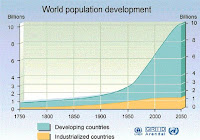
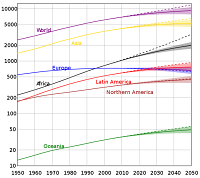
I’ve said it many times before: the crisis that will come determine the survival of the human race is the overpopulation crisis. The Earth has a finite “carrying capacity,” which we are coming closer and closer to with each passing day. Experts predict that in 2030 the world population will be 8.3 billion, and we are going to see serious shortages of food, water, and energy. Unless we can somehow manage to figure out how to more efficiently manage our resources or find more efficient ways of obtaining the resources we need, these shortages may result in complete economic and social collapse, possibly even the death of our race. What scares me (and many other people) most is the fact that 2030, when we will really have to face this crisis, is only 20 years away. In two decades—the blink of an eye, really—we will be faced with a crisis that could have disastrous results if mishandled.

But, strangely, a few people are incredibly confident about the whole thing. Why? They hold that though population increasing exponentially, so is technology. Soon, these optimists hold, technologies will be available that can solve the population crisis and increase the Earth’s carrying capacity. But is this simply misguided optimism? After all, since WWI we have seen that technology is often the cause of many problems, not the solution. Besides, is 20 years really enough time to solve a problem of such scope?

My answer is a very definite “sort of.” I suspect that technology will soften the blow, especially because technologies that will help us will be promoted over the next 20 years as the threat of food riots and economic collapse looms overhead. But I doubt that technology will not come close to fully solving the problem, for technological reasons, social ones, and economic ones.

The technological reason is simple: there just isn’t enough time. Granted, technological increase is exponential. But can we really find an unlimited source of food, an easier method of desalination, cheap energy, and a solution to air pollution in a mere 20 years, let alone implement these ideas in time? In order to develop the necessary technology, lots and lost of government-sponsored research is needed—and let’s face it, with the economy less and less of that is happening. Even if there is a space race-like surge in research, there is no guarantee that it will pay off.

Next, remember that the technology not only has to be available, it has to be cheap. For example, mass exodus to a moon colony is possible but wildly impractical because of the exorbitant cost. The same can be said for concepts such as vertical farming (farming in buildings) or similar urban farming projects. Water desalination is also economically unfeasible—we have the facilities and technology to distill more than enough seawater to meet our needs, but we cannot do it cheaply enough to make it economically viable.

Lastly, there is a social dimension to this crisis that could hinder efforts to resolve it. For example, environmentalists are opposed to genetically manipulated crops, which could prevent their widespread use. This social dimension is hard to measure, but until the populace realizes how dire the situation is I believe it will hinder efforts to solve the crisis. 

The final word is this: the crisis is coming. Technology can help us, but it won’t solve all of our problems. 

Sunday, March 22, 2009

Why we’re counting on Africa

When we think of Africa, we often think of disease, poverty, oppression, and hardship. The whole continent is looked at as backwards and worthless, a place where people will never be able to rise above what they have or produce all their need without help. Unfortunately much of this is true—in many places, Africa is a mess. However, what many people do not realize is that the fate of the world may be dependent upon the Dark Continent, and if we do not help Africa clean up its act we will all pay the price.

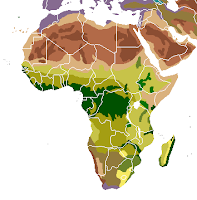
What am I talking about? Overpopulation, believe or not. Though Africa has some of the lowest birth rates in the world, it is crucial to the battle against overpopulation because of its one abundant natural resource: arable land. Africa possess huge tracts of untouched land that can be easily cleared for farming, but the political and social situation has prevented Africans from taking advantage of this. Though Asia, Europe, and the Americas export several times the amount of crops that Africa does, more that 70% of these continents’ arable land is already being used—there is little room for improvement. Africa’s though, it largely untouched—there is the potential to grow millions of hectares of crops there. This may be what ends up winning the battle against overpopulation, at least for now. 

But we’re going to have to act fast. Experts predict that the population crisis may create a “perfect storm” of shortages as soon as 2030. Though this may not cause global collapse, it will almost certainly cripple the world economy and result in shortages of food, water, and other resources. If Africa’s arable land is not put to good use soon, the crisis may have catastrophic effects.

How can we do this? Unfortunately, it’s not going to be easy, and it’s not going to happen very quickly. There are two general avenues of approach to this problem: direct and indirect. The direct method would have the most opposition, but it would probably be the most efficient. This direct method would involve Western agribusiness corporations purchasing large areas of land from African governments and then hiring people to work them (whether immigrants from other countries or simply natives). If governments resist, the UN and AU can be used to put pressure on these governments until they relent. The UN should closely oversee the whole operation, and peacekeeping troops may be needed to keep guerilla separatist/resistance groups down.

The indirect method may not work at all, but it would cost less and would not harm the current African governments. This would involve subsidizing and investing in African agribusiness to spur on an agricultural revolution. If we can turn Africa in to a major food exporter, this will not only help the welfare of the African nations involved but also put that fertile land to good use, which is the ultimate goal. Though this would still be costly and some of the money may go to waste because of looting African governments, it would not be as imperialistic as the direct method.              

Can we do it? I believe the answer depends upon whether we act fast. This project is going to take several decades to yield any meaningful results, so if we do not act quickly there it may be too late. I do not know how current governments feel about this issue, but I am sure they are aware of it. We can only hope that they will realize what needs to be done and do it without hesitation.       

Monday, March 2, 2009

What happened to libertarianism?

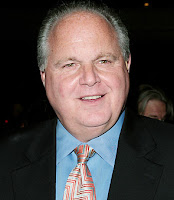
Ironic as it may sound, American conservatism has changed a great deal, and today it is radically different from its American Revolution-era predecessors. Originally, conservatism was very Jeffersonian: it stressed small government, agrarian societies, and social libertarianism. Though it had its roots in Christianity, American conservatism did not include any kind of moral reform or social control. Today, though, conservatism has gone in the opposite direction: today’s conservative leaders advocate Amendments to the Constitution (or laws that could be interpreted as violations thereof) to promote Christian influence and enforce moral rules as law. In other words: the movement has taken on a repressive, moralistic edge that is the complete antithesis of its libertarian beginnings. Don’t believe me? Look at today’s conservative leaders. For example, leading conservative commentators Rush Limbagh and Sean Hannity both preach excessive social control and religious influence in lawmaking. Former Vice Presidential candidate Sarah Palin, seen as a role model for neoconservatives, was famous for her rejection of Roe v. Wade, support of school prayer, and overpowering emphasis on the traditional family structure.

Furthermore, conservatism in the US has taken on an anti-intellectual edge. Conservative commentators reinforce the image of a “liberal” as an intellectual snob, This probably stems from the fact that intellectuals are often seen as challenging religious fundamentalism, especially in the ongoing debate over evolution.  As Sarah Palin proved, many conservatives consider it a virtue to lack an extensive education and mock those who do have one.

This begs the question “What prompted this radical change?” Part of the answer probably has to do with the fact that in recent years America has strayed from traditional values more than ever before. Today, the population is becoming increasingly more diverse—in many areas, whites are now in the minority. Likewise, the culture of America is straying farther and farther away from traditional values—homosexuality is becoming more accepted, feminism continues to challenge traditional standards, and religion’s influence in the public sphere is declining faster than ever. In short, America is quickly becoming a Mecca for cultural exchange and new thinking. I suspect that for many fundamentalist thinkers, this is too much change in too short a period of time. Thus, conservatives are becoming more outspoken about their beliefs rather than being blasé about the “liberal bias” in American culture. Also, remember that when libertarianism was popular (back in 1776), American culture was more homogenous, and there was great animosity toward the religious-based laws of Great Britain that discriminated against some American denominations. Hence, libertarianism. But today, as I explained, we have the opposite setup.

 The rest of the answer most likely has to do with conformism. Since the 1950's and 60’s, American youth has taken on its own kind of culture, which is mostly a culture of rebellion against the traditional. This, too, has angered fundamentalist thinkers, who see moral control as the only way to combat this noisome cultural rebellion.

The overall result is what psychologists term RWA (right-wing authoritarianism), which is the new face of American cultural conservatism. Sadly, this desire for social control is not only malevolent towards the kind of diversity that is necessary in today’s world, but also harmful to conservatism itself. The more fundamentalist the Republican Party and conservative movement becomes, the more it alienates centrist thinkers. This, in turn, may end up sabotaging the conservative movement for many years to come. 

Friday, February 20, 2009

On revisionist history

Yesterday I saw Oliver Stone’s recent movie “W.” The film chronicles the life of George W. Bush from his early days to the decision to invade Iraq. The movie was quite entertaining—thought it was almost two and a half hours long, the interesting portrayal of Bush and his advisors kept it from being soporific. However, like some of Stone’s previous works, the film reeks of revisionist history. Stone deliberately inserted some of Bush’s more embarrassing quotes into the film, often out of context. He certainly took liberties in depicting the Bush family dynamic—several of the Bushes criticized the film for this, in fact. He also included several scenes featuring confidential meetings between Bush and his advisors—the details of these are obviously unknown, so it is clear Stone made them up for the film. Overall, the film definitely has something of an anti-Bush bias—George W. is portrayed as bumbling, clueless, and overly dogmatic.

But today’s post is not just about beating up on Oliver Stone—I would like to talk about the dangers of revisionist history in general. Like “W,” much of the American media has become politically charged. Conservatives point the finger at liberal elites and the so-called “liberal media”—though they do have a point there are conservativism-based news broadcasters as well as liberal ones. But regardless of which side manipulating the facts, the fact is that the media is often not as neutral as we would like to think. And I don’t just mean news stations—as I showed with “W.” the deep divide between Democrats and Republicans has infiltrated all corners of our media. Perhaps worst of all are the films and television shows that, like “W,” pose as truth but are actually fiction. I have the same complaint about the “docu-drama,” a new genre of television that twists the facts about historical events for entertainment purposes.

Overall, revisionist history is dangerous, in both the long term and the short term. In the short term, it manipulates people’s opinions about a person or thing for false reasons. This is obviously the intent of such material in the first place; I am sorry to admit that it often works. In the case of “W,” the film probably cemented many people’s anti-Bush feelings for the wrong reasons. In the long term, too, revisionist history is dangerous. When future generations look back on our era, what they will see in our media is not the truth but fabrication; the real truth will be lost in time because our politically-charged media does not bother to cover it.

But what can we do about this? Very little, it seems. The spirit of partisanship has cemented itself in American politics and in the American media, and there is little the average person can do. I read the BBC news, as I have mentioned before, but I am not solving the problem by doing so—I am merely circumventing it, though only temporarily and to a certain extent. For now, we can merely hope that the US will someday rise above the petty partisan squabbling and resume reporting the truth. 

Tuesday, February 17, 2009

Amendment 1 vs. the FCC

In the past I have mentioned my libertarian views on government in the social sphere and my firm belief in a complete separation of church and state. However, what many people do not realize is that even the most secular administrations in the US haven’t even come close to a true separation of church and state. I am disgusted that cultural and religious minorities are ostracized and prevented from practicing what they believe in. But that’s old news—if you are interested in hearing the long litany of government violations of the First Amendment, see one or two of my previous posts.

But today something new occurred to me: do the FCC and the MPAA rating system violate this principle as well?

As far as I can tell, the answer is yes. Remember that both the FCC and the MPAA rating system are chiefly based on violent content, sexual content, and language. I have no problem with censoring the first, since it has been proven that too much exposure to violence can be harmful to children. However, the other two criteria are another matter. I have found no research suggesting that exposing children to sexual content or foul language is harmful to them. Why, then, is it censored in the first place? This is where the first Amendment comes in. Sexual content is censored not because viewing it is harmful to our health, but because the government believes it morally wrong and bad for us on a moral level. The situation is similar for language: certain words or phrases are considered obscene by certain groups because of cultural or religious connotations, and for this reason the government bans them. This is the violation of the First Amendment: the government is not supposed to tell us what we are allowed to view based on any kind of moral rating system.

Of course, if you support the FCC and MPAA rating system censoring sexual content, you are probably thinking, “What about all the innocent, ingenuous children? Don’t they deserve protection?” Yes, of course. But think about what exactly you are trying to protect them from when banning sexual content. You are preventing them from viewing sexual content because you believe it is morally wrong for them to view it, not because it is physically unhealthy for them to see it. Again, this is what violates the First Amendment: the government is not allowed to tell people what is moral and what is not.

Overall, I suspect that a society that brings sexuality into the open is probably far happier than one that declares it a taboo and shoves it into the closet. But that’s beside the point; the main idea is that people should have the ability to view content that others view as immoral if they so desire. Though I doubt such measures will even come into effect in the US—too much Judeo-Christian moral influence—I hope that we at least recognize that what we are doing is religious and cultural tyranny. Though democracy is what makes America so special, allowing the majority to vote to oppress the minority violates the US’s most important principle: our pledge to protect civil liberties and allow citizens to believe whatever they want. 

Monday, February 9, 2009

Avoiding MAD

I have briefly discussed the concept of MAD, or mutually assured destruction, here on this blog before. To review: during the Cold War, the US and the USSR followed a policy of “deterrence”—they realized that MAD would occur if either side attacked the other, so they tacitly agree to not take military direction against each other. But, as the Cold War proved, there are many ways to work around the policy of deterrence and MAD, as well as flaws in the theory itself.

When two nations have nuclear weapons and can destroy each other, in theory relations between the two should be tense but peaceful. Of course, the obvious problem is that even though this creates peace, this peace is jejune and superficial, as it did not come about by a true mutual agreement. Next, MAD does not account for technological advancement—if one country develops superior missile interception technology, that country can attack the other nation with impunity, as they no longer have to fear MAD. Additionally, there is the “Dr. Strangelove” argument—incompetence in government or a rouge faction of the military can create a situation that leads to war and eventually MAD. Next, if a government is willing to accept the terrible humanitarian toll of a nuclear war, they may go ahead and fight one anyway, in defiance of the theory of deterrence. Finally, MAD only applies to those countries with ICBMs—third world countries, which are not tied down to deterrence, can still attack or be attacked without the fear of nuclear bombing.

Even worse, as the Cold War proves, MAD does not necessarily mean an end to war. During the Cold War, the US implemented a plan of “containment,” in which we attempted to keep Soviet ideology from spreading. (This culminated in the Marshall Plan, which pumped $12 billion into post-war Europe to prevent them from lapsing into communism.) Also, as the Korean and the Vietnam war prove, proxy wars can still be fought in areas outside of the countries practicing deterrence. Lastly, the nations practicing deterrence can agree to fight each other using conventional warfare.

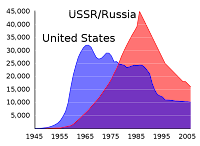
Out of all of these methods to circumvent MAD, the most frightening are the concepts that world leaders will continue to find technology to break out of MAD, and the fact that the military could settle for a nuclear war with “acceptable” losses. Also, during the Cold War both the US and the USSR worked to develop superior ballistic missile technologies, and both sides claimed that their own missiles were ahead of any competition, in what was called the “missile gap.” Amazingly, both the US and USSR made provisions for rebuilding their countries in the event of a nuclear attack, and both continued to develop missile defense technology. (“Dr. Strangelove” satirizes this aspect of the Cold War by suggesting that both countries will attempt to out-plan each other in this respect; when it is suggested to the US military that people can survive a nuclear blast by hiding in mine shaft, one general demands that mines be built deeper so that the US does not fall behind the Soviets in the “mine shaft gap.”)

Interestingly, the threat of MAD is just as prevalent as it was during the Cold War, yet the fear of nuclear war is no longer as prevalent as it once was. I suspect that the main reason for this is that there are no longer nations that were polar opposites and enemies as much as the United States and Soviet Union. Though tensions between superpowers flare up occasionally, the Cold War mentality of ultra-nationalism is mostly extinct. Next, remember that today we are more afraid of terrorist nuclear attacks rather than ballistic missiles. Bu the threat of MAD still exists; nuclear stockpiles are as large as they have ever been, and developing countries such as North Korea and Iran are soon going to be nuclear as well.

Despite its flaws, though, MAD and deterrence did prevent bloodshed, particularly during the Cold War. However, for countries to be truly at peace they must be allies, not enemies kept from war because of the fear of MAD. 

Wednesday, February 4, 2009

The elephant in the room

I recently read an article on the BBC News that I would like to discuss. The article talked about a topic I have mentioned here before, overpopulation. Specifically, the article discusses how talking about overpopulation has become something of a taboo with environmentalists because of the human rights issues involved. The article referred to overpopulation as “the elephant in the room” because it is so obvious but environmentalists continue to ignore it.

I hate to admit it, but this article brings up a profound point. Overpopulation is essentially the cause of almost all environmental issues; if the human population were smaller, the demand for natural resources and our pollution output would be significantly lower. However, I have never heard any environmentalist mention this issue. The reason for this probably does not have to do with human rights issues, though. In the US, at least, environmentalists are traditionally left-wing, and many of the measures suggested to combat overpopulation, such as limits on the number of children families can have, are typically unpopular with Democrats. Additionally, few people want to hear that the world’s environmental problems are caused by overpopulation; they would much rather hear that they can recycle and make everything better. Sadly, this approach only perpetuates the problem of overpopulation; if we want to solve it we first have to acknowledge it.

I would also like to talk about overpopulation in relation to global warming. The last time I talked about this, most of my predictions were based around the fact that the amount of arable land in the world does not change; however, climate change may change not only the amount of arable land but also its location. Regardless of whether global warming is man-made or natural, it will affect how we adapt to the coming overpopulation crisis.

Previously, I mostly ignored alternative methods of farming. However, I now realize that this was unwise—if we cannot accurately predict where the world’s arable land will be in the future, alternative methods of farming not reliant on climate are needed. Today, I would like to discuss a few of these.

The first and most obvious solution is hydroponics. Hydroponic farming is nothing new—we have had the technology for years, but because it is so much cheaper to farm on land it has never been put to much use. Should global warming shift where the world’s arable land is, though, that may change. This could also be combined with what is known as “vertical farming,” an idea for farming in an urban area. As the name suggests, a large skyscraper is filled with crops, which are irrigated via pipes (the windows are enlarged to allow enough sunlight to get in). Also, both techniques could be combined with a “grow light,” a light placed above a plant to allow it to grow without sunlight. LED grow lights are cheap and easy to manufacture, making indoor or even underground farming a possibility. 

As for meat, scientists are working on a way to “grow beef without the cow.” Amazingly, it is possible to grow only a certain kind of cell from a cow in an isolated environment. This may make it possible to grow enormous vats of beef not only making slaughterhouses obsolete but also greatly increasing the efficiency of producing beef, reducing the time, labor, and air pollution involved in the process. If it is sufficiently developed, this technology could be a major tool in combating overpopulation. If a similar process could be applied to plants, crop-growing could undergo similar efficiency increases, greatly improving our chances of beating starvation.

But one thing is clear: we cannot continue to push this issue under the rug. We must develop these technologies soon, or else we will fall victim to the inevitable crash following the population boom that has come to define modern human history (the last 10,000 years). It may not happen in our lifetime, but when it does we must be ready. 

Sunday, January 18, 2009

Gaza ceasefire: nothing gained

It appears the fighting in Gaza has subsided. Israel declared a ceasefire yesterday and has announced that they will be removing troops from Gaza. Today Hamas stated that they have agreed to the ceasefire and look forward to seeing the Israeli army out of Gaza. But the damage done speaks for itself: over the past few weeks, over 1,300 Palestinians have been killed, thousands more have been injured, many been driven from their homes and Gaza’s food supply and utilities have been crippled. And what has been achieved? Almost nothing. Hamas remains in control, and I doubt they are on any better terms with Israel than they were a month ago. Their military wing remains enormous, and they are still firing rockets at Israel on occasion.

So, where do we go from here? I don’t know. But I think there are many things we can learn from this brief crisis in Gaza. 

Firstly, this Gaza crisis reminds us of how turbulent the situation there really is. This is probably evident to people in Israel and Gaza, but to the rest of us sheltered in the Western world we do not hear much about it. This especially reminds us that a ceasefire is not a peace treaty or a time of peace; the Israeli attacks were prompted by Hamas attacks and tension that arose when the previous ceasefire ended. From this I gather that unless the UN or surrounding countries can make the current ceasefire last longer and be more legitimate war may well start again. 

Also, the crisis reminded us of how many Palestinians stand firmly behind Hamas and its militant wing. Many Palestinians in Gaza and the West Bank called for another intifada (which fortunately did not happen). Others stood strongly behind Hamas even after admitting that Hamas was mostly responsible for starting the violence.

Next, I would like to address the issue of white phosphorous gas. Many Palestinian news stations accused Israel of using this deadly gas, the use of which against populated areas has been outlawed by the UN and the Geneva Convention. Did they use it? I think the answer is yes. A later UN investigation clearly shows evidence of some of these WP bombs being used. (The picture on the left is one such piece of evidence.) So what does this mean? For the most part, it simply reinforces the message that Israel is not afraid to get its hands dirty. I am surprised and worried to hear that they even have WP weapons in the first place. I hope that should this conflict begin again Israel will refrain from using these weapons, but I am not optimistic about this. There is little we can do to prevent this, though, as the neither the UN nor humanitarian groups have been able to influence Israeli military policy thus far. 

I still believe that Hamas can be cleaned up and made more legitimate, as I discussed in “How to handle Hamas,” but I realize that is probably never going to happen because no one is going to step up and do it. Israel can’t—Hamas will physically fight them every step of the way. The UN can’t—they are far too weak to put such a program together. The US can’t—we have our own problems right now. So Israel’s goal of destroying them entirely is much more realistic. But is it the right course of action? I am not entirely sure. One thing is sure, though: we won’t be hearing the end of Gaza anytime soon. I have no doubt that the violence will continue, certainly before the year comes to a close. All we can do is watch, wait, and hope for the best.

Tomorrow I will begin a series that I hope you will find interesting.  

Thursday, January 15, 2009

Coal’s insidious influence

When we think about coal, we think about the bygone era when the sooty stuff was burned to heat our homes. We think of the first Industrial Revolution, of industrialists in top hats surveying strip mines. In other words: coal, in our minds, is not “modern”—it is a symbol of our past. But in reality, this is a myth. Big Coal is alive and well in the US, and it is even more powerful than Big Oil. Today, I would like to deconstruct our incorrect notions about coal, and explain why it plays far too big a part in the US’s energy future.

First, the raw facts: Coal generates 52.1% of electricity in the US. The US currently possesses 1,374 coal mines. In 2007 1,145,600,000 tons of coal were mined. Over 80,000 Americans are employed in the coal mining industry, and many times that number of people live near coal mines. More importantly: coal is not going anywhere anytime soon. US coal reserves stand at about 275 billion tons, which is more than any other nation in the world possesses. The EIA predicts that coal production will increase by 1.1 percent until at least 2030. Likewise, the amount of electricity produced by coal will increase.

Why is this a problem? Coal mining is dangerous, coal itself is a pollutant, and coal burning releases a variety of toxic gases into the air. Coal mining is one of the most dangerous industries in the US, resulting in a number of fatalities each year. Even worse, coal mines are a major source of pollution. Acid mine drainage and fine particulates are harmful to human health and the environment, and blasting mines ruins whole tracts of land. When coal is transported, it releases fine particulates that are hazardous to human heath. And when coal is burned, it gives off CO2, SO2 and other hazardous contaminants. Fortunately technologies such as CCS and IGCC are making coal-burning power plants cleaner by filtering out CO2 and other pollutants. But overall the phrase “clean coal” is a myth because the whole process from start to finish is extremely dirty and dangerous.

So, how do we break away from this dirty energy source? The answer is alternative energy. So far, the US is lacking in terms of clean energy—today renewables only power 1% of our electricity. The other problem with alternative energy sources is that they require electricity to produce, and as I explained above most of this electricity comes from coal. But since many alternative energy sources achieve energy “payback” very quickly (10 to 22 months for photovoltaics!) they can more than make up for the coal used to create them. So if global warming, peak oil, and threats to national security weren’t already enough reasons for the US to pursue energy independence through alternative energy sources, coal certainly is. The sooner we act on this one, the better. I sincerely hope Obama realizes the seriousness of this problem and corrects it by supplanting coal with better, cleaner energy sources. 

Tuesday, January 6, 2009

Our growing world

In 2010, the UN predicts that the world population will be approximately 6,830,283,000. In 2020, it will be 7,540,237,000. In 2030, it will be 8,130,149,000. And in 2050, it will be 8,918,724,000. In other words: our world is undergoing a population explosion. In a matter of centuries—a blink of the eye in relation to human history—the world will be packed with human beings.

How did this happen? How did we, as a species, manage to break out of our early years as hunter-gatherers and form such large, complex societies? The answer, as Jared Diamond explained in his groundbreaking book Guns, Germs, and Steel, is agriculture. Once agriculture was developed, societies could support large populations and specialization, leading to more complex and larger groups of human beings. Over time, fertility rates increased as a result of this newfound food supply, eventually creating the population explosion that formed the modern world.

But the “why” is irrelevant—the issue this population forecast raises may be the most important question of our time: How do we deal with it? How do we support a world population of 10, 20, or 30 billion?  This is obviously a problem of resources: Today, I would like to go down the list of resources essential to our survival, and discuss possible solutions.

The first and most important resource is water. Fresh water makes up only a small fraction of the total amount of water on this planet—and we have an endless demand for it. Remember that water is not only for drinking—even more is needed for agriculture, industry, and infrastructure. Fortunately, desalination is a viable alternative—Israel, Saudi Arabia, and other countries have the technology to desalinate a cubic meter of water for about 50 cents. In other areas of the world this technology is more expensive—so, in order for the world to begin transitioning to desalinated water, the technology must be made cheaper and more readily available. However, this is not as easily achievable as it sounds, and I would not be surprised if fresh water becomes the cause of resource wars, especially in Africa or the Middle East.

The next resource, which is equally important, is food. The future of agriculture does not look as bright as the future of water—even as far back as the 1800’s, the economist Thomas Malthus predicted that overpopulation would eventually result in an food crisis, since he believe that food production increases at a linear rate and population increases at an exponential rate. Though this theory has been proven wrong, Malthus’s prediction is right: food production has not been increasing as much as it needs to be. Even in the past few years, food riots have occurred in areas like the Philippines, where he price of wheat has skyrocketed due to shortages. Looking forward, it is obvious that land is going to become an issue for the food industry. North America and Asia have already used of most of their arable land, while Africa and South America have more untapped potential, especially Africa. In order to ensure a more stable food supply, the world must encourage a major agricultural revolution in Africa. Furthermore, in order to grow food more efficiently, high-density crops such as lettuce must be grown in place of more inefficient ones. Next, the effects of global warming (regardless of whether it is natural or man-made) will have a huge impact on the future of agriculture. If it reduces the amount of arable land in the world, we may have a much harder time supporting a large population. Though hydroponics and vertical farming can counteract this to some extent, the loss of arable land could seriously cripple farmers, which could leave the worldwide agricultural industry in a slump. Also, the food industry is linked to the water supply—if water desalination does not progress enough, agriculture will suffer regardless of any other factors. Additionally, this is linked to the problem of fertilizer—modern fertilizers use a large amount of petroleum, and if peak oil is true and/or the oil industry crashes a food crisis will occur, hurting the agricultural industry even more. Fortunately (and somewhat surprisingly) the amount of land area occupied by human dwellings is not much of a threat to agriculture—cities are predicted to become even denser, and the UN predicts that in the next 20 years 3 out of 5 people will live in a city. Even so, there are a multitude of problems confronting the food industry, and unless these can be solved we are almost certainly headed for a Malthusian catastrophe.  

The next resource we need to worry about is energy. I am not as worried about this one as I am about an impending food crisis, but energy is still an issue we need to consider. The first step is to gradually transition to renewables, but this is not too much of a problem because many countries are motivated by global warming to do so anyway. Obviously relying on a non-renewable resource in unwise, and with the world population expanding so quickly a finite resource can run out startlingly fast. However, I am not worried because the technology of renewable energy will continue to increase over the next few decades, and very soon renewables will be economically superior to finite sources of energy.

In addition to these, overpopulation has other adverse effects on our planet. I would like to take a moment to discuss these as well.

The main problem posed by overpopulation is the danger to the environment. Deforestation and desertification will most likely increase as the population rises, which will harm ecosystems and my result in mass extinctions. Also, air pollution may be a result on an increased population unless filtering technology increases dramatically. If global warming is man-made, overpopulation may very well drive it over the edge. This would not only hurt the environment even more, but it would also make things more difficult for the agricultural industry.

Next, overpopulation may result in widespread poverty. Even if we manage to handle the resource problems well, I doubt we can deal with them well enough to allow however many billion people there are to live in prosperity. This may make it harder to ensure we have enough of the resources listed above, and it might lead to an increase in crime or other factors that lower quality of life. Malthus would have us believe that we should welcome this—he famously stated that when people allow themselves to expand, nature will take over and do the job for us. However, I hope we can avoid poverty to the point of starvation by implementing our own, more peaceful solutions to overpopulation and by ensuring that the human race has enough food.

Because overpopulation makes our future looks quite bleak, many intellectuals have suggested ideas to curb the population, preventing this Malthusian crisis from occurring. Though most of these ideas are wildly impractical or controversial, I would like to talk about them because they may be our only hope for the future.

One of the more popular—and also more controversial—solutions to the overpopulation problem is eugenics. Many groups have advocated a “one-child rule” for the entire planet, in the hopes that this will curb the exponential trend of population growth. This is probably the most viable of the solutions offered, and even though the rule would be ignored to some extent it might be able to reduce population growth somewhat. The main problem with this program, though, is that it would be very difficult to implement—the UN is not influential enough to convince many nations to submit to the program, so it would have to come from an international agreement like the Kyoto Protocol.

On a similar vein, some have suggested that we must make changes to our social structure, such as the elimination of marriage or even polygamy. These are probably not as effective, and since they are so radical I doubt many countries would implement them. However, plain old feminism may be good enough to reduce the population growth rate, coupled with an increase in the availability of contraception. Overall, though, none of these are true solutions, since they are probably not powerful enough to really curb the growth of the world population.

Other scientists and economists have offered more radical solutions, such as space colonization. Though this would solve the population problem, it is far from a practical solution. Space travel remains exorbitantly expensive, making it impractical to transport large populations to other worlds. Also, not means of space travel currently exists that can transport human beings outside of the solar system within one lifetime, and astronomers do not even know if other planets capable of supporting human life exists. However, outer space may be a viable source of resources—the Moon, for example, contains a variety of useful metals, and lunar ice could be a potential source of fresh water. For now, though, this solution to the population problem resides only in the realm of science fiction.

Fringe groups are also suggesting that vaccinations should no longer be issued, so that healthcare will decrease, causing people to die “naturally.” This will create a sort of social Darwinism, which will gradually reduce the population. Though this may be effective, it is hardly a desirable or practical solution. No country is going to willingly give up vaccinations, and no one wants to hear that the solution to overpopulation is to allow a large amount of the population to die.

So, what is the verdict on overpopulation? Simply this: we should be worried. Though the dreaded Malthusian crisis may not happen in our lifetime, our children and our children’s children may have to deal with it. We should work towards ensuring that our supply of food, water, and energy is secure, so that we can deal with overpopulation as smoothly as possible. Unless space colonization becomes viable, we are going to have to figure out how to stabilize our population. Overpopulation is often over looked, but very soon it is going to determine whether we as a species are able to survive as a large and complex civilization. The sooner we start dealing with it, the better. 

Saturday, December 20, 2008

MADness

Warning: Today’s post is a little morbid.

MAD, or mutually assured destruction, is a military acronym for a nuclear war in which both (or all) countries were able to hit each other with nuclear weapons. Obviously this is a scenario we would like to avoid, and for the past 50 years, nuclear non-proliferation groups have been trying to do just that. These groups have been working to ban nuclear weapons and reduce nuclear stockpiles by ensuring the safe decommissioning of these weapons. These programs have been met with mixed success—overall, stockpiles have not gone down, but there is certainly more awareness of who has nuclear arms. Some countries, such as Russia, have only agreed to decommission missiles that are now outdated anyway.

But recently I was wondering if non-proliferation is really what is best for us. As crazy as it may sound, it may be safer for us to have nuclear weapons than not to have them.

I would like to discuss an analogy used by Tom Clancy in one of his books. It goes something like this: I am pointing a loaded gun at you, which has six bullets in it. You realize that this is a problem, so you decide to reduce the danger by convincing me to take three bullets out of the gun. But the fact remains: three bullets is more than enough to do you in. Clancy’s point is obvious: reducing nuclear arms stockpiles is useless—either nuclear weapons must be totally banned, or simply allowed in any quantity. One is all it takes to commit atrocities.

Next, remember that the fear of MAD is one of the reasons a nuclear war has never taken place. Because missile interception pales in comparison with missile stealth technology, no one is going to want to start a nuclear was because it is more than likely that everyone is going to get hit. Even though we came awfully close during the Cuban missile crisis, the reason we were able to eventually resolve the problem is that no one really wanted MAD. The fear of MAD also deters wars between superpowers, since nuclear war would seem the most likely option—and neither side really wants that.

Also, consider the other potential uses for nuclear weapons. For example, there is no other way to swat an incoming asteroid out of the sky. Also, “clean” atomic bombs are often used to create huge holes in the ground for mining purposes.

Of course, I am not suggesting that nuclear weapons are nothing to be worried about. I do have some serious concerns when it comes to WMD’s. The first is terrorism. Recently New York City created something called “the ring,” which is a series of radiation detectors at tollbooths on highways leading into the city. Why? Because the threat of a nuclear attack is still present. Countries like Russia must not be so careless when it comes to security, since carelessness with weapons of mass destruction puts everyone at risk. Next, third-world countries with nuclear weapons worry me. India does not bother me because their centralized government is stable, but what about countries like Iran and North Korea? They are far from benevolent, and their political climates are too turbulent to be safe. Mixed with nuclear weapons, that won’t be a pretty sight.

I would now like to make one final comment on MAD. Despite the fact that it deters war, I have no doubt that if one country launched a nuclear missile a whole bunch of countries would. This might sound natural, but think about it for a moment. If you are the leader of a country that is about to be obliterated, why take steps to obliterate the people attacking you? It serves no logical purpose, and is simply a destructive act of vengeance. Once world leaders realize this, I think, the world will be much safer. Because, as some philosopher once remarked, in the nuclear age the enemy is war itself. 

Friday, December 19, 2008

Bumper to bumper

Today’s subject matter is a bit different from the more philosophical topics I usually discuss on this blog. However, it is an important social issue, and I feel it is worth mentioning.
What I would like to talk about today is traffic. Specifically, I’d like to talk about Manhattan, where traffic has become such a chronic disease that many New Yorkers don’t even own a car. The root of the problem is obvious: Manhattan is tiny, only about 23 square miles, but it houses over 1.6 million people. All these people (plus the ones coming in to work from the other boroughs or from New Jersey) have to get around somehow, and public transportation simply can’t take them all.

But I think the solution is remarkably simple: ban cars. This may sound radical, but it is probably the most effective solution to Manhattan’s traffic problem, as I will explain.

My basic plan is as follows: No privately owned cars are allowed inside the island of Manhattan, except on the one road that travels along the circumference of the city and two or three that cross it east-west. To make up for this, public transportation (subway trains, buses, etc.) will be increased. Taxi services can continue (taxies are not privately owned) but they will be subject to regulation to limit the number of taxies each company can put on the road at one time. The owners of facilities relating to motor vehicle parking or maintenance inside the new no-car zone will be given the option of selling their property to the state of New York for a reasonable price. Subsidies will also be given to these companies, so that parking garages and other facilities can be built along the island’s perimeter.

The benefits of such a program are obvious. The most obvious benefit is the fact that “traffic” as we know it will no longer exist in most of Manhattan. There are also huge environmental benefits—thousands of cars will be taken of the road, reducing CO2 emissions and even possibly reducing oil dependence by a noticeable amount. By removing these cars, this program will also help keep the city cleaner and improve the air quality. It will promote a healthier lifestyle for many New Yorkers, which is important because America is gradually becoming more and more obese.

Furthermore, this idea is not without precedent—a few years ago, Beijing had very few cars relative to the size of the city. Most people got around by walking or using Beijing’s most famous bike, the “flying pigeon.” Today, though, urban sprawl has made the car a necessity for many people in Beijing. But Manhattan doesn’t have that problem—its size is permanently limited, so anyone who lives and works in Manhattan will never need a car.

But how would New York legislature pass such a program? In its initial phases, this kind of project is enormously expensive. It would be highly undesirable (at least at first) to people who commute in, out, or through Manhattan. Because of this, I doubt that even a quarter of New Yorkers would vote for this program. Thus, the only way for something like this to be implemented would be for the governor of New York and the mayor of NYC to cooperate and execute it before bureaucracy bogs the whole thing down. I would also recommend that the program be executed as quickly as possible—people will initially whine and complain, but eventually they will see the long-term benefits. (Whereas if it were phased in slowly, public opinion of it would be so negative that the whole thing would most likely be cancelled.) Unfortunately this is rather draconian, but the simple fact is most New Yorkers will not be too happy about not being able to use their cars (at least at first).

This program could also be applied to other cities. Los Angeles recently underwent “Manhattanization,” and it has become an extremely high-density city. However, Manhattan is still the most ideal choice because of its size limitations.