Showing posts with label politics. Show all posts

Monday, April 27, 2009

Pandemic time?

Tomorrow I will return to the Bush lexicon—today I have a more pressing issue to discuss: swine flu. Until a few days ago, the term was virtually unheard of, but now the threat of a global swine flu pandemic is all over the media. There are a few key questions about the possibility of a pandemic that I would like to address today.

First, what are the chances of swine flu becoming a global pandemic? The answer depends on two factors: how well we can contain the virus, and how contagious it is. It is already obvious how quickly disease can spread as a result of air travel—cases of swine flu have already been confirmed in the US, EU, and New Zealand. However, if hospitals follow adequate sanitation procedures, it is possible to prevent the disease from spreading to everyone. As far as the contagiousness of the virus goes, I believe we will just have to wait and find out—it will probably take a week at least for scientists to analyze the virus. But what is the bottom line? Are we headed for a pandemic? I believe the answer may be yes. We have already seen cases of swine flu all over the world, and there are undoubtedly more people infected than meets the eye.

Already several countries are attempting to close their doors to prevent the spread of this disease, such as Japan, China, Malaysia, and Indonesia, who have banned pork imports from Mexico and the US. Other countries will probably begin following in their footsteps, cutting off air travel to the Western Hemisphere. However, I believe that these efforts are mostly futile—in today’s world, it is almost impossible to completely isolate any one country from the rest of the world. Without a doubt, the swine flu will eventually enter these nations if it hasn’t already—between air, land, and sea travel, it is far to impractical to keep everyone out of a country.

Next—and perhaps most important—are we ready? Thankfully, I think the answer is “yes” here too. Over the past few years the world has been stocking up on anti-flu supplies in preparation for the expected bird flu epidemic, and we certainly have large quantities of anti-viral medicines like Tamiflu. However, we do lack a vaccine for swine flu as of right now, but that is not too much of a concern. Of course, this does not mean that we do not have to take action if swine flu becomes a pandemic, but we will not have to worry about the fall of civilization. As always, Third World countries will have a higher mortality rate than developed countries, and there may be serious issues in African countries if swine flu reaches there.

China will probably suffer the worst—it possesses several highly concentrated population centers—Beijing, Shanghai, and Hong Kong—that lack first-class healthcare or measure to contain the spread of disease. How the Chinese government will react to this new threat will be interesting indeed.

So, to summarize: I am not worried. Though swine flu may turn into a pandemic, the world is not unprepared for it. We can only watch and wait for further developments. 

Saturday, April 25, 2009

What's in a name? (part 1)

The War on Terror is over. At least, Obama has told his top advisors and officials to stop using the term and instead use the phrase “Overseas Contingency Operations.” This is not the only name-change that Obama has put in place—in fact, it seems as if he is purposely trying to discard as many Bush-era phrases as quickly has he can. Today, I would like to discuss the lexicon of the Bush Administration, its effects on America, and why President Obama is so eager to move away from it. In particular, there are a few phrases I would like to discuss:
War on Terror—this is perhaps the most notable phrase of the Bush era, it is equally important to note how quickly Obama opted to change it. This phrase is designed to be a euphemism for Bush’s neoconservative approach foreign policy, which groups nations and peoples into clearly defined, black-and-white categories. “War” implies two distinct and well-defined sides engaged in open warfare so that one side will ultimately obliterate the other. “Terror,” of course, is a reference to 9/11, the mere mention of which infuriated Americans a few years ago. The phrase helped to sell the war using an age-old fear-mongering technique: make something sound far more sinister and dire than it actually is.

It is no surprise to me that Obama wants to replace this with a more euphemistic phrase. First, the Iraq War is no longer a war in the traditional sense—it is much closer to a police action than anything else. Since Obama is focusing on getting out of Afghanistan and Iraq, he does not want to make it sound as if we have a full-fledge war on our hands. Still, there are some dangers to using euphemisms for armed conflicts—as Robert Heinlein points out (I’m paraphrasing) “You are just as dead in a police action as you are in a real war.” Even so, Obama’s term is far more accurate than Bush’s extreme-sounding “Global War on Terror.”

Axis of Evil—like “War on Terror,” this reinforces the neoconservative foreign policy stance. Bush used this term to describe Iran, Iraq, and North Korea. As Bush put it: “States like these, and their terrorist allies, constitute an axis of evil, arming to threaten the peace of the world.” To many Americans, the word “axis” still retains a negative connotation from the Axis Power of WWII, which was undoubtedly why Bush chose in included. Like “War on Terror,” the phrase is intended to sell the Iraq War and make the situation seem more extreme than it actually was. It is interesting to note that the three nations included in Bush’s axis are not even working together—North Korea has no affiliation with Iran or Iraq. Obama has never used this term, which is unsurprising since his foreign policy is far more diplomatic than Bush’s. Also, there is not longer any reason to portray Iraq as “evil” because it has undergone a regime change. Thus, “axis of evil” is more outdated than it is incompatible with Obama’s policies.

Tomorrow I will cover more terms used during the Bush years and discuss their significance. 

Wednesday, April 22, 2009

So much for unity...

Though I am reluctant to judge Obama just yet, one aspect of his administration is clear: his promise to “end partisanship” in America will go unfulfilled. In fact, since his administration took power the opposite has happened. Today, I would like to discuss this growing trend of partisanship and how to prevent it. Much of this recent surge of partisanship is not Obama’s fault, but merely the result of the fact that he is so liberal. In other areas, though, he is indeed responsible.
The first arena in which Obama’s promise will go unfulfilled is in Congress itself. During the election, he promised to work more closely with Republicans in Congress, ensuring that his legislation would have the support of both parties. Instead, the results of the election made the Republicans an endangered species in Congress, making it difficult to oppose the Democrats. This, in turn, caused the Democrats to attempt to pass legislation that they wouldn’t otherwise, infuriating the Republicans.

To be fair, not much of this is Obama’s fault—though he could have done a better job of working with Republicans on the stimulus bill, many of them refused approve any kind of government spending related legislation, making compromise impossible. Additionally, many Democrats exacerbated the problem by attempting to abuse their newfound supermajority, which angered Republicans and made them less willing to compromise.

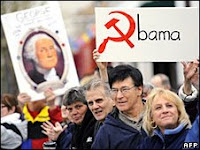
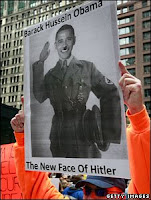
Obama’s election has also created partisan issues in the public sphere. After some of the stimulus legislation and bailouts passed, many prominent conservatives turned into alarmists, declaring that Obama is a socialist, communist, Muslim, and tyrant. The best example of this is the infamous Tea Parties, which had cropped up in response to the most recent economic legislation. Also, other social issues are inflaming conservatives, such as Obama’s reversal of the stem cell research ban. There are also some issues concerning gun control, even though Obama has done nothing in this area so far. In fact, many gun-happy Americans are buying as many weapons as they can, fearing that Obama is going to tighten gun control laws.

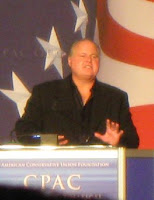
These social issues (and the all-important economic one) could be considered Obama’s fault, but he is not to blame for the alarmism and destructive criticism. I certainly understand the animosity towards bailouts and the inevitable tax increases. But the real instigators of the conservative anti-Obama movement are Republican rabble-rousers such as Rush Limbaugh, who, as we all know, “hopes Obama fails.” To put it bluntly, I have no sympathy for these destructive critics, just as I had no sympathy for those who blithely criticized George Bush without offering their own solution. However, many Americans are so infuriated and depressed with the economic situation that ruthless rhetoric sounds appealing.

What can we do about this issue? Unfortunately, I do not believe there is an easy solution. Americans are almost always going to disagree, and there are always going to be rabble-rousers on both sides of party lines. The best we can hope for is that Americans eventually grow tired of constant criticism and resolve to form their own opinions. But I’m not holding my breath. 

Monday, April 20, 2009

The new capitalism

For weeks, political pundits—both liberal and conservative—have been rambling on about their belief that Obama’s policies are going to create a new form of American capitalism, the likes of which have never been seen before. Conservative pundits have attempted to use this as a fear-mongering technique, spreading the dire warning that Obama is peddling socialism. Until now I have looked upon these claims with skepticism—after all, during the Great Depression FDR used socialistic policies to create consumerism, which became the biggest boost to American capitalism in all of American history. Though his policies where based around government intervention, at heart FDR was still an avid defender of capitalism.

But Obama is not FDR. Though both are using government intervention to save capitalism, it is becoming clearer every day that Obama does not plan to return to the status quo after the recession ends. I am not worried that Obama is a radical leftist who will destroy American economic freedom, but I think it is clear that we will not be returning to business as usual.

The first and most obvious sign of this is the G20 Summit. Not only did Obama wholeheartedly support the conference, but he supported mandates to regulate global trade, support the International Monetary Fund, and encourage government spending to end the global recession. This is a far cry from “Reaganomics,” where government is viewed as the problem, not the solution. Next, Obama has clearly stated his intent of guiding American industry and banking to prosperity. He demanded the resignation of a prominent auto executive, and has supported bailouts for banks and financial institutions, something even Democratic Presidents would be hesitant about.

These signs (warning signs, to conservatives) hint at a future paradigm shift in American economic policy. Clearly, Obama is planning to re-invent capitalism and the way America interacts with the world, probably through legislation.  

When will these changes occur? I don’t know for sure, but I believe it will be soon. Recall that immediately after the election Obama promised to “fix” the US economy and declared that the American people could hold him responsible for the result of his administration. What this means is simple: he acknowledges that if he can’t “fix it” in 4 years, he won’t be re-elected. However, it is probably impossible to bring us back to where we were in 2008 in 4 years, so many Americans will be unhappy even if Obama manages to slow or stop the recession (and decide not to vote for him again anyway). Also, Obama probably realizes that if things do not begin to turn around by 2010, the Democrats may lose their majority in Congress. Thus, I believe that Obama plans to implement his reforms sometime the next year or so. I am not sure exactly how or even what he plans to do, but I think we are going to see a major economic policy shift in the next few years. 

Will Obama’s reforms be for the best? This is a very difficult question, and we can only speculate. For one thing, it is obvious that the world is no longer going to depend on the US economy as much as it used to. Though this reduces our role in world politics, I believe it is for the best because our economic growth can no longer match that of developing countries. However, this economic influence may be crucial in the potential cold war against China, in which the US will probably be hard-pressed (once again) from preventing an authoritarian government from expanding its influence. As always, though only time will tell the real result of Obama’s reform. One thing is clear, though: we will see change soon, be it for the better or worse.  

Sunday, April 19, 2009

On the Obama’s dog

Today I would like to discuss a somewhat innocuous issue that has been all over the news lately: the Obama family’s new dog, Bo. The American media has eaten this story up, providing in-depth discussion of the dog’s breed and how it is being cared for. I would like to discuss the implications of the massive amount of media coverage for such a small, unimportant event.

At first, I was dismayed by the media’s treatment of this issue. With so many serious issues ahead of us, I looked with scorn upon the media’s focus on pointless stories such as this one. I feared the lasting effect that treating Obama like a celebrity could have. If the media continues to portray Obama as a celebrity figure, in the minds of many Americans he may become one, with disastrous results. Like other American celebrities, Americans might pay close attention to Obama’s personal like without caring about the important things he does. After all, he is the President of the United States, and we must not allow ourselves to get distracted from his policies by trivial details about he personal life. This concern is not entirely unfounded—former President Bill Clinton suffered from this celebrity syndrome, and by the end of his administration people no longer cared about his policies, only about his sex scandals. In fact, I recently saw a program on the History Channel that summarized the events during the term of each President. In Clinton’s segment, none of his polices or decisions were discussed, bu the Monica Lewinsky affair was talked about at length. To be fair, Clinton brought this upon himself—during his Presidential campaign Clinton tried to appear “cool” to appeal to younger voters, even going so far as to appear on MTV playing the saxophone on election night. 

However, I now believe that giving this story so much attention may be for the better. Though it distracts from the more serious issues, this is not as unfortunate as I originally thought. In times as grim as these, people need something trivial to take their minds off of their concerns, and the Obama family’s dog does just that. People can follow the plight of Barack’s Portuguese water dog instead of worrying about their own trouble, and escape (if only for a minute) from the harsh realities they must face. Indeed, this same concept of escapism is what makes the Hollywood culture so appealing to many Americans. Americans often nitpick over their heroes, as we saw with the unending praise for pilot Chelsea B. Sullenburger, who landed a plane in the Hudson River. Thus, as long as we avoid treating our President as a superficial celebrity, I see no problem with caring about what brand of dog food Bo is going to get. In this respect, too, I am more confident: if the issue is put in perspective, it is obvious that the President’s family getting a dog is far less celebrity-like than the President cheating on his wife. 

Thursday, April 16, 2009

1776 in 2009 (part 2)

Nowhere is the issue of Americans longing for 1776 more present than in the issue of gun control. Gun-toting Americans see gun control laws as an offense to the men of 1776, who proudly carried guns and respected others’ rights to do so. However, regardless of whether gun control is justified, it is important to note that things have changed considerable since 1776, so the argument that “it’s what the Founding Fathers wanted” is not as valid as it seems.
The first difference between 1776 and today that relates to gun control is the fact that the reason people need guns is different. In 1776, society was more agrarian, less industrial, and more of a “pioneer culture.” In colonial times guns were not only helpful to deter crime, but also necessary for survival. Guns were essential for hunting, protection against robbers or invading Indians, and many other uses. Because of this, the way people viewed gun control in 1776 was very different from today: back then, t would have seemed far more tyrannical to take away people’s guns than it does now. 

Next, remember that in 1776 guns were very different than they are now. At the time of the American Revolution the best weapons were primitive flintlock muskets, and pistols could only fire one shot. Today, though, we have a wide variety of extremely deadly firearms, from handguns to high-powered rifles to automatic weapons. These make it possible for a single person to kill many other people quickly and easily, which is a concept that simply didn’t exist in the Founding Fathers’ time. 

However, there is one fundamental aspect of gun control that has not changed since 1776: gun control can act as a deterrent to crime. Similar to the way the fear of Mutually Assured Destruction (MAD) deters nuclear war, guns can prevent crime by acting as an equalizer. Today, pro-gun and conservative politicians often cite this effect as justification for less gun control.

So, what can this tell us about the issue of gun control? One thing is clear: preserving the right to bear arms simply because “the Founding Fathers would want it” is an absurd an invalid argument. So much has changed technologically and societal since 1776 that the principles behind the 2nd Amendment are radically different today. However, there is still some merit to the 2nd Amendment as a deterrent to crime. Also, from a libertarian perspective the problem changes only superficially—since libertarians believe that the preservation of civil liberties is the most important thing, the social issues surrounding guns are irrelevant. From are more practical perspective, though, these issues must be taken into consideration. Also, think about this: even if less gun control would deter crime, what sort of weapons should be banned? Should automatic weapons be allowed? What about assault rifles or explosives? I’ll leave it to my readers to decide for themselves.

Monday, April 6, 2009

A “nuclear-free world” (part 2)

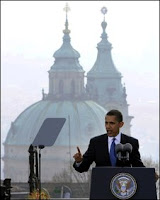
Now I would like to move on to what President Obama means by the phrase “nuclear-free world.” In a recent speech, he outlined his dream of a future in which no nation possesses nuclear weapons, making war obsolete. However, I am not so sure that this would be as idyllic of a future as Obama makes it seem. Also, I doubt that what Obama is suggesting is even possible.

First, I will address the issue of whether a world without nuclear weapons is desirable. Obviously it is in our benefit to prevent terrorists, belligerent nations, or unstable nations from building nuclear weapons, and preventing certain countries from having nuclear weapons would be a good idea. If fewer nations, or none at all, have atomic weapons, it is much more difficult for terrorists to obtain them. However, it would not be impossible for them to do so, as the knowledge required to make nuke still exists. It is certainly possible for a nation or group to build nuclear weapons without help from other countries, as North Korea proves. A nation that possesses nuclear weapons has enormous leverage over other nations, and in a non-nuclear world this means that any nation can simply build nukes and become a world power. Granted, Obama is also stressing missile defense systems, but these systems are far from perfect, and technologies to allow missiles to bypass these systems are being developed as fast as the systems themselves.

Also, remember that nuclear weapons are a deterrent to war. During the Cold War, neither side went to war because of the fear of MAD, or mutually assumed destruction. Today, the same scenario exists, which is the reason that no large-scale nuclear war has ever occurred. If nuclear weapons were taken away, there are fewer disincentives from waging conventional war on others. Take WWII, for example—Germany believed that it could win the war in Europe, so it invaded its neighbors mercilessly. However, if other nations had nuclear weapons, Germany probably would have never attacked, since a conventional attack would result in an un-winnable nuclear war. Indeed, the idea of a nuclear war with “acceptable” casualties ended long ago, in the early days of the Cold War. Since then, most people realize the futility of trying to launch a pre-emptive strike, nuclear or non-nuclear. However, if nuclear weapons were removed from the scenario, the result would change—nations could attack each other more easily, as there are no nukes to level the playing field.

Granted, the philosophy of MAD is not perfect. The policy makes many assumptions that are not necessarily true, and many contingencies—especially the dreaded “Dr. Strangelove” scenario—can occur. Overall, though, MAD and deterrence are the reason that no true nuclear was has ever occurred, and to take this away would probably not have a good effect on world affairs.

Additionally, the goal of a non-nuclear world is unattainable. Few nations are going to want to surrender their atomic weapons, especially belligerent ones such as Iran and North Korea. In fact, just a few days ago North Korea launched a rocket that was supposedly a test for long-range missiles, despite the fact that the US and UN demanded that the launch be aborted. Also, it is unlikely that any nation, no matter how well intentioned, will want to surrender their nuclear weapons while other nations still possess theirs. However, this may be the only solution, as a truly simultaneous disarmament is impossible.

Overall, Obama’s goal is noble, but extraordinarily impractical one to carry out. Instead of pushing for disarmament, Obama should be stressing diplomacy—it is still possible for nations to get along, even if both have the capacity to destroy the other. 

A “nuclear-free world” (part 1)

In a recent speech, President Obama called on European nations to support nuclear non-proliferation treaties and asked them to begin to reduce the number of nuclear missiles in existence. Obama also asked other nations, such as Russia and China, to stop building nuclear weapons and start disarming them instead. Obama is clearly trying to reach what he calls a “nuclear-free world”—a future where no nations possess nuclear weapons. Today, I would like to explore this idea of a world without nuclear arms.

Before I discuss Obama’s vision of a nuclear-free world, I would like to talk about a similar topic: how would history have progressed if nuclear weapons had never been invented? I believe that the course of history would be radically different, as certain nations—especially the US—have used nuclear weapons as a bargaining chip to attain their status as a world power.

Firstly, WWII would have ended very differently. The US would have had to launch a full-scale invasion of Japan (probably in 1946, which was Truman’s original plan), which would have cost hundreds of thousands if not millions of lives. Japan would have been completely shattered, and the US would be significantly weakened as well. This would mean that the Soviet Union would be just as powerful—if not more powerful—than the US. They would also be far less influenced by US intimidation because the US would not possess the atomic bomb, the use of which on Japan worried the Soviet Union. 

The Cold War would still have occurred because of the ideological differences between the US and USSR, but the way it would be fought would be very different from what actually happened. For example, Europe might have fallen to the Soviets because the US probably wouldn’t have the money to execute the Marshall Plan. Also, the Cold War’s “proxy wars,” the Korean War and the Vietnam War, may have been fought differently because there would be less fear of the US and USSR engaging in direct warfare (because neither possessed nuclear weapons). However, I find it unlikely that a full-scale conventional war would erupt between the two powers. If such a war did occur, though, the results would be catastrophic and unpredictable.

The 1960’s and 1970’s would probably be about the same—the Cold War would continue, the anti-war movement in the US would be stunted by a conservative President, the civil rights movement would finally achieve results. Sometime in the 1980’s or 1990’s the Soviet Union would collapse.

Overall, the world would be similar on the surface but different on deeper levels. The Cold War would bring with it a different mentality, not one of fear but of intense nationalism, similar to the national pride felt during WWII. The US would have a smaller role in world affairs, as the negative economic results of an extended WWII would weaken the country somewhat. Additionally, wars between smaller countries (and even possibly larger ones, such as China) might occur as late as the 60’s, 70’s, 80’s, or 90’s, because no nation has nuclear weapons, which often deter war from occurring. In general, the world would not be a better place—and certainly not a utopian one—without nuclear weapons. Instead, because of nuclear deterrence, there would probably be more people killed in war had the atomic bomb never been invented. 

Later today I will discuss what President Obama means by the term “nuclear-free world.”

Thursday, April 2, 2009

The future of the UN

The UN, or United Nations, was founded to prevent wars and settle disputes between countries peacefully. A noble goal, but there is just one problem: the UN is weak. Since its inception, the UN has been the pawn of the nations on the UNSC (the UN Security Council)—when all of them agree on something, the UN takes action. But otherwise the organization becomes bogged down with endless discussion and debate. The UN can clearly do more than this, and I believe it should be a stronger, more federal organization between the countries that make it up. Today, I will explain why I support a stronger UN.


The main reason for a stronger UN is to keep belligerent nations in line. Today the UN is made up of many nations, most of whom share the common interest of preventing warring nations from causing harm. However, the UN is often unable to achieve this because their “peacekeeping” army is quite small, and UN intervention often raises eyebrows. For example, in the case of the Iraq War, most of the nations on the UN and UNSC supported entering Iraq, but because of the way the UN functions it is almost impossible for the organization to declare war without unilateral support. If this is amended, the UN can intimidate belligerent nations such as Iran or North Korea because the UN would attack these nations if they disobey it. Though this sounds overly imperialistic, it is very important in the nuclear age—for example, I doubt North Korea would launch a nuclear attack if they knew UN nations would launch a counterstrike.

The second reason is an extension of the UN’s original purpose, peacekeeping. The UN can be used to ensure that the nations that constitute it do not go to war with another by requiring nations participating in the UN to sign a treaty forcing all nations in the UN to go to war with any other UN nation that acts aggressively or violates UN mandates. This will effectively keep UN nations at peace with each other—though this peace might be tense, it would be peace nonetheless.

Furthermore, the UN can be used to issue directives related to environmental, economic, or natural resource-related issues. For example, the UN can coordinate with the IMF and other organizations to regulate international trade and resource distribution. I believe that this power is going to be extremely important in the years to come because of the looming overpopulation crisis and the threat of global warming.

Of course, I am not suggesting that the UN become an all-controlling world government. I am simply suggesting that if the UN were more efficient and more federal, it could accomplish far more. But, as is always the case, if this power is not coupled with responsibility, the results will be disastrous.

But are any of these goals realistic? Is it reasonable to expect the UN to morph into a stronger, more federal union? Probably not. Since its inception, the UN has been bogged down by mindless debate, and even the UNSC members don’t always get along. In the next few years the situation may worsen, as China is beginning to take on a Cold War-type mentality, which is clearly incompatible with a federal UN. 

Monday, March 30, 2009

Update: Obama and Pakistan

Last week I wrote about the US’s military’s use of unmanned drones to carry out air strikes in Pakistan. The air strikes have caused an increase of anti-Americanism in Pakistan, and I suggested that President Obama work with Pakistani authorities rather than ignore them. Amazingly, he has done just that—today, Obama agreed to consult Pakistani military leaders before performing air strikes in the country. With any luck, this should prevent more anti-Americanism from forming in the region by making the US seem more benevolent and cooperative. However, this is not the only thing I would like to talk about today—the White House has just released their new Afghanistan/Pakistan strategies, and I would like to discuss these. 

The main theme seems to be combining the plans for Pakistan and the plans for Afghanistan into a “coherent whole.”  Obama is making it very clear that the war will continue, but the way we handle it will change. This is not a “surge,” but an ongoing effort to pursue Al-Queda and put Afghani and Pakistani security forces in control of the situation. It will require more US troops to be sent overseas, but there is a clear exist strategy in mind: subdue the terrorists to the point where the local authorities can take over. There is clearly far more emphasis on reconstruction compared to the Bush Doctrine—as I understand it, the original plans for the Iraq War assumed that the Iraqis could rebuilt their country in 6 months.

The report also calls for more cooperation between US agencies and organizations in order to form a more concrete strategy. I believe that this is the most important point, since it is lack of communication that made the war in Iraq such a disaster. The US was woefully unprepared for the kind of war it was fighting, and there was no clearly defined exit strategy. If we can get the various branches of the military to communicate with each other and with other agencies (such as the CIA, FBI, NSA, etc.) I believe we will be fighting far more effectively. I am particularly concerned with the NSA—I suspect they have a gold mine of information about terrorist cells that the operational branches of the military have not tapped into yet.  

It is also clear that the US is going to call on other, non-NATO nations, such as China and Russia, to help out (or at least not oppose) with the war effort. I doubt this part of the report will have any significance—though Obama has a better repertoire with other heads of state than Bush did, I doubt he will be able to convince nations to commit themselves to a war means very little to them. 

Overall, will this strategy work? I think it might, but not as perfectly as Obama hopes. I believe his policy of better communication and will work far better than Bush’s “War on Terror,” which was ignorant of the fact that the nations the US is invading are not happy about the fact that their homeland is being meddled with. However, I don’t think that this new policy will destroy Al-Queda or the Taliban completely. It is almost impossible to completely snub radicalism in the Middle East, and it is going to take at least several years for local security forces to be able to handle this fight themselves. Additionally, Al-Queda is a worldwide organization—though we are eliminating some of their cells and cutting off their influence in two major Arab nations, we are not destroying the organization entirely. Sadly, in order to do so a much more interventionist policy is needed, one that would undoubtedly have the world spite the United States. 

Sunday, March 22, 2009

Why we’re counting on Africa

When we think of Africa, we often think of disease, poverty, oppression, and hardship. The whole continent is looked at as backwards and worthless, a place where people will never be able to rise above what they have or produce all their need without help. Unfortunately much of this is true—in many places, Africa is a mess. However, what many people do not realize is that the fate of the world may be dependent upon the Dark Continent, and if we do not help Africa clean up its act we will all pay the price.

What am I talking about? Overpopulation, believe or not. Though Africa has some of the lowest birth rates in the world, it is crucial to the battle against overpopulation because of its one abundant natural resource: arable land. Africa possess huge tracts of untouched land that can be easily cleared for farming, but the political and social situation has prevented Africans from taking advantage of this. Though Asia, Europe, and the Americas export several times the amount of crops that Africa does, more that 70% of these continents’ arable land is already being used—there is little room for improvement. Africa’s though, it largely untouched—there is the potential to grow millions of hectares of crops there. This may be what ends up winning the battle against overpopulation, at least for now. 

But we’re going to have to act fast. Experts predict that the population crisis may create a “perfect storm” of shortages as soon as 2030. Though this may not cause global collapse, it will almost certainly cripple the world economy and result in shortages of food, water, and other resources. If Africa’s arable land is not put to good use soon, the crisis may have catastrophic effects.

How can we do this? Unfortunately, it’s not going to be easy, and it’s not going to happen very quickly. There are two general avenues of approach to this problem: direct and indirect. The direct method would have the most opposition, but it would probably be the most efficient. This direct method would involve Western agribusiness corporations purchasing large areas of land from African governments and then hiring people to work them (whether immigrants from other countries or simply natives). If governments resist, the UN and AU can be used to put pressure on these governments until they relent. The UN should closely oversee the whole operation, and peacekeeping troops may be needed to keep guerilla separatist/resistance groups down.

The indirect method may not work at all, but it would cost less and would not harm the current African governments. This would involve subsidizing and investing in African agribusiness to spur on an agricultural revolution. If we can turn Africa in to a major food exporter, this will not only help the welfare of the African nations involved but also put that fertile land to good use, which is the ultimate goal. Though this would still be costly and some of the money may go to waste because of looting African governments, it would not be as imperialistic as the direct method.              

Can we do it? I believe the answer depends upon whether we act fast. This project is going to take several decades to yield any meaningful results, so if we do not act quickly there it may be too late. I do not know how current governments feel about this issue, but I am sure they are aware of it. We can only hope that they will realize what needs to be done and do it without hesitation.       

Wednesday, March 18, 2009

Obama and Pakistan

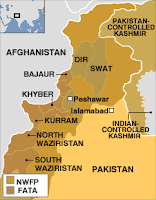
As President Obama has said several times, in order to win the war on terror we must focus our attention on Pakistan. Osama Bin Laden is supposedly hiding in mountain caves in the northern region of the country, and Taliban and Al-Qaeda are reportedly active in Pakistan as well. Obama has stated that we must strengthen negotiations with the Pakistani government in order to more effectively hunt the Taliban hiding in the north, which is an admirable—if a bit impractical—goal. But US policies in the region threaten to undermine, policies that Obama is doing nothing to change. If he continues to do nothing, I fear that sooner or later both the government and people of Pakistan develop some strong anti-US sentiment.
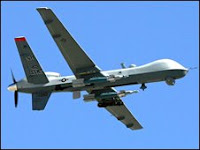

The most important policy is the unmanned aircraft strikes on Taliban hideouts. These involve the hit-and-run bombing of buildings supposedly containing Taliban insurgents, mostly in rural areas in the north of Pakistan. This week, in fact, there were several more of these strikes, which killed about 10 Pakistanis, at least 5 of whom were Taliban insurgents. However, these impersonal airstrikes sometimes kill civilians or destroy civilian houses, which has lead many tribal groups to hate the US and demand that the airstrikes stop. The Pakistani government has also spoken out against these airstrikes for similar reasons.

The second reason is India. India and Pakistan may soon be at each other’s throats, as tension over various issues has escalated over the past few years. The revelation that Pakistani terrorists were behind the Mumbai attacks angered many Indians, and the issue of who owns the province of Kashmir flared up during elections in India. The last armed conflict over the region was in 1965, but neither side was able to fully conquer the territory and the UN had to negotiate a stalemate. The issue is still enormously important to both Indians and Pakistanis, and it may be the spark that sets of a war in the region. 

So what can Obama do to prevent the US from getting entangled in Pakistan’s problems? There are probably many answers, but I would like to highlight a few key policies that I believe need changing if we are to salvage our relationship with Pakistan. The first simple: do something about the airstrikes. I recommend one of the following options: (1) use drones only to reconnoiter and search for Bin Laden rather than for the purpose of bombing small villages that supposedly contain terrorists, or (2) simply let the Pakistani government in on what’s going on, and don’t act without their approval. Either option should lessen the Pakistani people’s hatred of American intervention, since it will make our operations seem less invasive and more legitimate. As for India-Pakistan relations, here the US must do all it can to stay out of the way. It is the UN’s job, not the US’s, to mediate disputes between the two countries. If we get too caught up in this conflict, we may find ourselves dealing with a major war if it flares up.

Of course, the whole issue of dealing with Pakistan is really a secondary one, at least compared to the overwhelming issue that is the economy. But at times like these we should try to minimize the number of foreign entanglements we have to deal with, so I sincerely hope that President Obama deals more diplomatically with Pakistan than his predecessor did. 

Friday, March 13, 2009

Death of the GOP?

Is the Republican Party on its deathbed? 

Interestingly, a few years ago this question would have seemed silly. But today I think the question is a legitimate one that deserves serious analysis.

The answer is most likely very dependent on how the financial crisis is resolved. If President Obama’s stimulus plan works, it will mean a huge blow to fiscal conservatism. The days of Alan Greenspan and “Reganomics” will no longer be looked at with nostalgia. The Democrats will undoubtedly rub this in the Republican’s faces, Republican Congressmen who are currently in opposition to the plan will not be thought highly of. Obama will certainly be re-elected, and I would not be surprised if several more Democratic Presidents are elected after him. But if the plan fails, Republicans might have a chance at rebirth. The GOP use Obama’s failed policies as a campaign tool that would probably win them many seats in Congress and possibly the Presidency in four years.

However, the economy is not the only variable in this equation. Social conservatism, an extremely important tenet of the Republican Party, may very well be on its last legs. I am not suggesting that the movement is going to die out, but I believe that the majority of Americans will no longer consider themselves social conservatives or vote for an overly conservative candidate. The best example that comes to mind is former Vice Presidential candidate Sarah Palin, whose popularity rating was around 30%. Palin’s radically conservative views repulsed most Americans, particularly her anti-intellectual sentiments. However, the social conservative base rallied around her views, despite the fact that they are at odds with those of many other Americans. Also, immigration and globalization are rapidly changing the face of American values. Latino immigrants are more likely to be liberal and vote Democratic, increasing the liberal majority by a significant amount. Also, the GOP’s current leader, Michael Steele, called for numerous reforms as a part of his wants to make the Party more attractive to the average American. If he succeeds, he may end up killing social conservatism as we know it. (On a humorous note: Steele said he even wanted to make the GOP attractive to “one-armed midgets.”)

Finally, the GOP currently lacks any semblance of strong leadership. Michael Steele is essentially a figurehead, and I suspect that many conservatives will work against he attempts to give the Party a “hip-hop makeover.” On the other hand, a very dangerous individual’s influence is waxing, so much so that conservatives everywhere are apologizing for any negative comments they may have said about him previously. I am talking, of course, about Rush Limbaugh. Even Michael Steele was forced to apologize to Rush after calling him “an entertainer.” Rush is a radical social conservative, and one of the most hard-line right wing authoritarians I have ever seen. In the future, Rush may be a rallying point for conservatives, but the media’s denouncement of Rush may hurt his popularity in the country overall. In other words: though Republicans may rally around him, centrists and liberals will do everything they can to stop him.

So is the Republican Party dead? Not yet, but if Obama fixes the economy they may hit they lowest point in decades. Though I am a Democrat, I do not welcome the GOP collapsing: a one party system makes government far more efficient for my taste. A two party system offers just enough impediments to government to create a balance of limited government and strong government. 

Monday, March 9, 2009

China: still a threat to democracy

Previously I discussed China being a threat to democracy because it refuses to address human rights issues and set a good example for the nations around it. But because of the economic crisis, shifting populations and some current events, China’s authoritarian threat is even greater than ever.

China recently pledged itself to “never adopt a Western-style democracy” (see here). Worse still, they have refused to accept any liberalization at all—instead, they vowed to strengthen the Communist Party’s leadership. I suspect the Communist Party will stay true to this statement—as a ruling body, they have little to gain by Westernizing.

The economic crisis will also affect the situation. The downturn will slow down China’s huge growth, causing many migrant workers to lose their jobs. This, as the BBC suggests, will cause social unrest and possibly protests. If this occurs, it will not cause the government to weaken but instead will provide an excuse for more human rights and privacy violations. If China’s economy suffers even worse than expected, they may increase the size of their military or resort to protectionism, which could seriously damage the many countries (especially the US) who purchase goods from the Chinese.

The fact that China possesses more than one-fifth of the world’s population will also come into play. China is very dependent on the rest of the world for food, and as their population increases this may come to hurt them economically and structurally. Remember the food riots in the Philippines last year? If a similar food shortage happened in China, much larger and much more severe riots would break out. This, too, would cause China to revert to an even more authoritarian stance. If the population problem continues to worsen, China may even go to war with some of the surrounding nations for resources, or at least threaten them until they give China what they want.

So how can the West—and the rest of the world—protect itself from the overshadowing threat to human rights and democracy that is China? Unfortunately there are very few options. Though China may be changing their economy to a slightly more capitalistic system, they are not liberalizing. Western nations cannot really threaten then militarily, as China possesses a considerably large standing army, and the UN cannot pressure China because it is on the UNSC. The only road to change may be though Chinese culture, which is becoming more and more Americanized. Hopefully this influence will permeate throughout Chinese culture and make it more democratic. With luck this will increase the pressure on the government to Westernize or possibly influenced the government directly. Beyond that, though, there is little the West can do to stop China. For the time being China is on the rise, and there is little the West, whose influence is fading, can do about it.   

Saturday, March 7, 2009

American fascism

No, I’m not suggesting that the US government is fascist. But I would like to speculate on what it would take for the US to lapse into fascism. Though I am not concerned it will happen, I think it would be interesting to discuss.

To fully examine this problem, we should first look at what caused the rise of fascism in other nations. The best three examples I can think of are Germany, Italy, and Japan during the early 1930’s. I believe that the ascent of fascism in these states was caused by three classes of factors: economic, political and cultural.

The economic aspect is probably the easiest to analyze: all three countries were in a state of abject poverty before the fascists took power. In Germany, at least, this was directly related to the appeal of fascism: Hitler promised a “National Socialism” (which was nothing like Marxian socialism) to fix the German economy. Italy had a similar situation, and Japan was lacking in natural resources and needed economic expansion. This need for more natural resources would have fitted in perfectly with the fascist principle of imperialistic Social Darwinism, making fascism economically ideal for the Japanese. 

The political aspect requires a brief look at the post WWI period. In Germany, the treaty of Versailles had crippled Germany’s economy by demanding huge reparations, and many important areas of the German Empire—Poland, the Rhineland, Danzig, the Sudetenland—were under Allied control and were then allowed to become autonomous. Fiercely nationalistic Germans in these areas and in Germany demanded that the territories be returned to Germany, and many others wanted revenge against the Allies. Hitler must have seemed extremely desirable to both of these factions, as he promised to encourage more defense spending and expand Germany’s military. In Japan, the Showa movement was nationalistic faction devoted to the destruction communism, socialism, anarchism, etc. The organization played on similar national sentiments, vowing to instill a sense of nationalism and patriotism to Japan; group eventually evolved into Japan’s fascist government. In Italy there was something of a power vacuum—many were afraid of a communism revolution, and the fate of the country was uncertain. Mussolini promised a strong (and anti-communist) government, which must have  been very appealing to worried Italians.

The cultural aspect is the most intangible but perhaps one of the most important. In Germany and Japan the cultural aspect was obviously significant: in Japan, most Japanese people revered their ruler and treated him like a god; in German Hitler aroused anti-Semitic sentiments to unite the German people. Additionally, the Japanese saw their race as the Asian “master race,” a concept similar to the German superiority complex of the time. In Italy the situation was a bit different: the public supported Mussolini’s “blackshirts” because they were the only ones able to defend the country from the hated pro-labor liberals, including communists, socialists, trade unionists, and anarchists. However, the recurrent theme is that in all three countries the ascending government was able to use the culture of the society to facilitate their rise to power by improving their appeal.

So, what can this tell us about the possibility of American fascism? Right now, at least, America is safe from a totalitarian threat: America is not suffering from serious economic woes (compared to those of the 30’s, I mean), its government is secure and has a high approval rating, and there are no cultural constructs that challenge the current democratic system. However, it is possible that if the economic situation worsens fascism might seem to be a more desirable option, at least to some.

For example, if the economy worsens severely, Americans might become more sympathetic to economic policies that involve government intervention. Also, many Americans would want a stronger justice system to combat the crime that usually goes along with a depression. Additionally, if religious fundamentalism increases, this could provide a platform for a right-wing authoritarianism leader.

But remember that the cultural factors are clearly against fascism. Americans are strictly opposed to anything that limits their natural rights. We are obsessed with democracy, and fiercely proud of the fact that we are a democratic nation. Also, we still vividly remember the WWII years, in which we saw the horrors that fascism created.

Because of this, I am not sure that American fascism could ever develop. If it does, however, it would have to be many years in the future, since it would take a lot of time for fascism ideas to catch on in such a democratic nation.  

Thursday, March 5, 2009

Communism: insufficient data

Americans are quick to point to Russia and China as examples of why communism and socialism cannot function on a large scale. However, I believe that Russia and China are not qualified to be considered case studies for communism, for reasons I shall explain.

The main reason Russia is not a sufficient example is very simple: Stalinism. When the Soviet Union began, Russian politicians such as Stalin and Lenin transformed the Soviet Union into something Marx would never have approved of. They crushed liberalism and suspended human rights, turning the country into a dictatorship in the name of prosperity. What Stalinism created was communism, but not in the liberal, democratic form Marxism envisioned. 

Also, note Russia was forced into communism—it did not develop naturally according to Marx’s theories. Marx believed that eventually the proletariat would revolt against capitalism and form a socialist republic. Eventually this would turn into a communist entity simply because Marx believed the latter is more efficient. In Russia, though, this did not occur: after the Revolution the nation was forced into communism.

In China, the situation is a bit different. Though the Chinese government is known for its human rights violations, its governmental philosophy is not nearly as “Stalinistic” as Russia’s. However, they too were forced into communism, negating Marx’s predictions on how communism would arise. Additionally, China is incorporating many capitalist aspects into their economic system, probably because of the necessity to trade with Western societies. Their system is no longer “pure communism,” which also indicates that it cannot be used as a case study for the economic validity of communism.

Because of these factors, we cannot consider Russia or China as case studies for communism, nor can we dismiss communism as a political theory because of the USSR’s collapse. Instead, we must look at smaller examples. I would like to take a moment to discuss a few of these:

The most successful applications of Marxist theory I can think of are the Israeli kibbutzim. These are small socialistic/communalistic communities, usually in rural areas. The residents of a kibbutz often reside in a single, communal living area, and most of them are employed in producing the main product that the kibbutz sells. Kibbutzim are remarkable successful, and they certainly prove that socialism is very efficient in small communities. They also lend some support to the Marx theory of “natural communism,” though I would not consider them alone a proof of this.

The next example is Cuba. Like Russia, Cuba was forced into communism, and like Russia, Cuba is lacking in the liberalism that Marx stressed. However, Cuba’s isolationist policies do make is something of an example of communist economics, and the results are not pretty. Though Cuban communism does have positive aspects, such as healthcare, much of the population is unable to rise out of poverty.

So for now I am holding my evaluation of communism and socialism until a time when we have more concrete examples. However, one trend is clear: communism and socialism often lead to obsequious, servile state-worship, which in turn often leads to unexpected negative consequences. But in terms of evaluating economic prosperity we will just have to wait until someone tries again.


Wednesday, March 4, 2009

One step forward, a million steps to go

In today’s second post, I am going to briefly discuss the International Criminal Court’s arrest warrant for Omar al-Bashir, the President of Sudan.
The ICC proclaimed that the President was guilty of numerous crimes against humanity, most of them relating to Darfur. They called on Bashir to surrender to the UN, and asked any country he visits to detain him. The US State Dept. and the EU gave the ruling full support, and UN Secretary-General Ban Ki-Moon urged Sudan to cooperate as well. Human rights groups celebrated as well, declaring the day a "victory".

Bashir’s response was quite predictable: he refused to acknowledge the ICC’s decision, and has blatantly stated that he will not cooperate with the warrant or with the UN. He has scorned the UN and the ruling, and he will almost certainly not surrender to the ICC. Bashir then proceeded to call the ICC a “neo-colonialist” organization that has no right to arrest him. Interestingly, Egypt has sided with Bashir, and has called for an emergency meeting on the UNSC to “defer implementation” of the ruling. Also, the AU (African Union) stated somewhat cryptically, “We support the fight against impunity. But we say that peace and justice should not collide, that the need for justice should not override the need for peace.” By this I assume that the AU is unhappy with the ruling but does not   

Though this is a step in the right direction, it is far from a resolution to the Darfur conflict. UN troops will continue their usual attempted “peacekeeping” effort, and the genocide will continue. Even if Bashir is apprehended, the conflict will not stop. Though Bashir is undoubtedly linked to the genocide, his arrest will not destroy the janjaweed, the poverty, the tribal structure of the region, or the racial prejudice that caused the Darfur situation in the first place. This would probably take serious UN or AU intervention, and intervention is an unrealistic hope because the AU never wants to get involved and the UN doesn’t want to take on such a big task. Besides, peacemaking would violate the UN’s current Darfur policy of peacekeeping.

I am not suggesting that the Western world is wrong to point their fingers at Bashir—he definitely deserves the ICC’s ruling. But he is not the main cause of the conflict, nor will his arrest change the political situation in Sudan. Some of the overly optimistic human rights groups seem to thing that a large portion of the conflict will end with Bashir’s arrest. Instead, this is only the beginning.  

One thing is sure, though: if Bashir is caught he will never be exculpated or released. That, at least, is some comfort. 

Monday, March 2, 2009

What happened to libertarianism?

Ironic as it may sound, American conservatism has changed a great deal, and today it is radically different from its American Revolution-era predecessors. Originally, conservatism was very Jeffersonian: it stressed small government, agrarian societies, and social libertarianism. Though it had its roots in Christianity, American conservatism did not include any kind of moral reform or social control. Today, though, conservatism has gone in the opposite direction: today’s conservative leaders advocate Amendments to the Constitution (or laws that could be interpreted as violations thereof) to promote Christian influence and enforce moral rules as law. In other words: the movement has taken on a repressive, moralistic edge that is the complete antithesis of its libertarian beginnings. Don’t believe me? Look at today’s conservative leaders. For example, leading conservative commentators Rush Limbagh and Sean Hannity both preach excessive social control and religious influence in lawmaking. Former Vice Presidential candidate Sarah Palin, seen as a role model for neoconservatives, was famous for her rejection of Roe v. Wade, support of school prayer, and overpowering emphasis on the traditional family structure.

Furthermore, conservatism in the US has taken on an anti-intellectual edge. Conservative commentators reinforce the image of a “liberal” as an intellectual snob, This probably stems from the fact that intellectuals are often seen as challenging religious fundamentalism, especially in the ongoing debate over evolution.  As Sarah Palin proved, many conservatives consider it a virtue to lack an extensive education and mock those who do have one.

This begs the question “What prompted this radical change?” Part of the answer probably has to do with the fact that in recent years America has strayed from traditional values more than ever before. Today, the population is becoming increasingly more diverse—in many areas, whites are now in the minority. Likewise, the culture of America is straying farther and farther away from traditional values—homosexuality is becoming more accepted, feminism continues to challenge traditional standards, and religion’s influence in the public sphere is declining faster than ever. In short, America is quickly becoming a Mecca for cultural exchange and new thinking. I suspect that for many fundamentalist thinkers, this is too much change in too short a period of time. Thus, conservatives are becoming more outspoken about their beliefs rather than being blasé about the “liberal bias” in American culture. Also, remember that when libertarianism was popular (back in 1776), American culture was more homogenous, and there was great animosity toward the religious-based laws of Great Britain that discriminated against some American denominations. Hence, libertarianism. But today, as I explained, we have the opposite setup.

 The rest of the answer most likely has to do with conformism. Since the 1950's and 60’s, American youth has taken on its own kind of culture, which is mostly a culture of rebellion against the traditional. This, too, has angered fundamentalist thinkers, who see moral control as the only way to combat this noisome cultural rebellion.

The overall result is what psychologists term RWA (right-wing authoritarianism), which is the new face of American cultural conservatism. Sadly, this desire for social control is not only malevolent towards the kind of diversity that is necessary in today’s world, but also harmful to conservatism itself. The more fundamentalist the Republican Party and conservative movement becomes, the more it alienates centrist thinkers. This, in turn, may end up sabotaging the conservative movement for many years to come. 

Thursday, February 26, 2009

On Obama’s words of wisdom

On Tuesday President Obama spoke to Congress about the state of the economy. In this speech, he justified his economic stimulus plan and explained why America needs it. There are a few comments I have about the content and delivery of the speech that I would like to discuss.
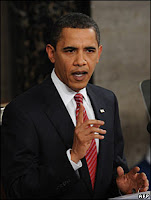
Overall, I was impressed with Obama’s tone and delivery of the speech. He did not shy away from telling us what we needed to hear, but neither did he say anything that would make Wall Street panic again (or at least it didn’t sound like it). I did find the incessant applause breaks annoying, though. A few times I found them quite reminiscent of those during speeches given by fascist leaders, particularly because of the fact that they were scripted. (I am not calling Obama a fascist—I am just making a comparison.) Though Obama does need to “sell” his plan to us, are theatrics really necessary? Besides, the applause breaks give Obama’s opponents a chance to snub him by not clapping at the appropriate moments (which many did). Beyond that, though, I have no complaints about the delivery of the speech—as always, Obama is an erudite orator.

Throughout the speech, Obama had outlined where his plan’s money was going and why. I found most of his explanations satisfactory. But after the speech, I had a startling thought: Who the heck is paying for all this? And when? At one point in the speech, he states that “we cannot leave the deficit my administration inherited for future generations.” Fine, fine. But then he goes on to say, “families making under $250,000 a year will receive a tax rebate and no tax increase.” He went on to talk about other tax cuts included in his plan. But if he is not raising taxes, who is going to pay for this? Yes, Obama is raising taxes on the rich, but surely this will not pay off $800 billion + the existing deficit + however much Gietner’s absurd plan is going to cost. Though I am a supporter of fiat money, Obama must “play by the rules” and pay back any debt he creates. So, is he going to leave some of this debt for future generations anyway? Or does he have something else in mind?

In general, I do agree with Obama’s stance that we must avoid the “politicians’ fallacy” (known as the Thatcherite fallacy in the UK) when dealing with the recession. For those unfamiliar with this logic error, the proof looks something like this:

1) We must do something.

2) This is something.

3) Therefore, we must do this.

Instead, Obama has always stated that we cannot afford to make a mistake here. Though action is necessary, it must be the right kind of action. With any luck we will eventually reap the benefits of this stimulus plan, which the President has put so much faith in. 

Tomorrow I will return to what I was discussing yesterday: Applied Monetary Management. 

Friday, February 20, 2009

On revisionist history

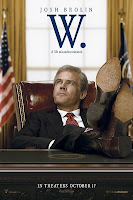
Yesterday I saw Oliver Stone’s recent movie “W.” The film chronicles the life of George W. Bush from his early days to the decision to invade Iraq. The movie was quite entertaining—thought it was almost two and a half hours long, the interesting portrayal of Bush and his advisors kept it from being soporific. However, like some of Stone’s previous works, the film reeks of revisionist history. Stone deliberately inserted some of Bush’s more embarrassing quotes into the film, often out of context. He certainly took liberties in depicting the Bush family dynamic—several of the Bushes criticized the film for this, in fact. He also included several scenes featuring confidential meetings between Bush and his advisors—the details of these are obviously unknown, so it is clear Stone made them up for the film. Overall, the film definitely has something of an anti-Bush bias—George W. is portrayed as bumbling, clueless, and overly dogmatic.
But today’s post is not just about beating up on Oliver Stone—I would like to talk about the dangers of revisionist history in general. Like “W,” much of the American media has become politically charged. Conservatives point the finger at liberal elites and the so-called “liberal media”—though they do have a point there are conservativism-based news broadcasters as well as liberal ones. But regardless of which side manipulating the facts, the fact is that the media is often not as neutral as we would like to think. And I don’t just mean news stations—as I showed with “W.” the deep divide between Democrats and Republicans has infiltrated all corners of our media. Perhaps worst of all are the films and television shows that, like “W,” pose as truth but are actually fiction. I have the same complaint about the “docu-drama,” a new genre of television that twists the facts about historical events for entertainment purposes.

Overall, revisionist history is dangerous, in both the long term and the short term. In the short term, it manipulates people’s opinions about a person or thing for false reasons. This is obviously the intent of such material in the first place; I am sorry to admit that it often works. In the case of “W,” the film probably cemented many people’s anti-Bush feelings for the wrong reasons. In the long term, too, revisionist history is dangerous. When future generations look back on our era, what they will see in our media is not the truth but fabrication; the real truth will be lost in time because our politically-charged media does not bother to cover it.

But what can we do about this? Very little, it seems. The spirit of partisanship has cemented itself in American politics and in the American media, and there is little the average person can do. I read the BBC news, as I have mentioned before, but I am not solving the problem by doing so—I am merely circumventing it, though only temporarily and to a certain extent. For now, we can merely hope that the US will someday rise above the petty partisan squabbling and resume reporting the truth.