Monday, April 27, 2009

Pandemic time?

Tomorrow I will return to the Bush lexicon—today I have a more pressing issue to discuss: swine flu. Until a few days ago, the term was virtually unheard of, but now the threat of a global swine flu pandemic is all over the media. There are a few key questions about the possibility of a pandemic that I would like to address today.

First, what are the chances of swine flu becoming a global pandemic? The answer depends on two factors: how well we can contain the virus, and how contagious it is. It is already obvious how quickly disease can spread as a result of air travel—cases of swine flu have already been confirmed in the US, EU, and New Zealand. However, if hospitals follow adequate sanitation procedures, it is possible to prevent the disease from spreading to everyone. As far as the contagiousness of the virus goes, I believe we will just have to wait and find out—it will probably take a week at least for scientists to analyze the virus. But what is the bottom line? Are we headed for a pandemic? I believe the answer may be yes. We have already seen cases of swine flu all over the world, and there are undoubtedly more people infected than meets the eye.

Already several countries are attempting to close their doors to prevent the spread of this disease, such as Japan, China, Malaysia, and Indonesia, who have banned pork imports from Mexico and the US. Other countries will probably begin following in their footsteps, cutting off air travel to the Western Hemisphere. However, I believe that these efforts are mostly futile—in today’s world, it is almost impossible to completely isolate any one country from the rest of the world. Without a doubt, the swine flu will eventually enter these nations if it hasn’t already—between air, land, and sea travel, it is far to impractical to keep everyone out of a country.

Next—and perhaps most important—are we ready? Thankfully, I think the answer is “yes” here too. Over the past few years the world has been stocking up on anti-flu supplies in preparation for the expected bird flu epidemic, and we certainly have large quantities of anti-viral medicines like Tamiflu. However, we do lack a vaccine for swine flu as of right now, but that is not too much of a concern. Of course, this does not mean that we do not have to take action if swine flu becomes a pandemic, but we will not have to worry about the fall of civilization. As always, Third World countries will have a higher mortality rate than developed countries, and there may be serious issues in African countries if swine flu reaches there.

China will probably suffer the worst—it possesses several highly concentrated population centers—Beijing, Shanghai, and Hong Kong—that lack first-class healthcare or measure to contain the spread of disease. How the Chinese government will react to this new threat will be interesting indeed.

So, to summarize: I am not worried. Though swine flu may turn into a pandemic, the world is not unprepared for it. We can only watch and wait for further developments. 

Saturday, April 25, 2009

What's in a name? (part 1)

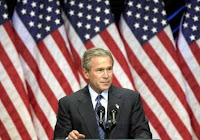
The War on Terror is over. At least, Obama has told his top advisors and officials to stop using the term and instead use the phrase “Overseas Contingency Operations.” This is not the only name-change that Obama has put in place—in fact, it seems as if he is purposely trying to discard as many Bush-era phrases as quickly has he can. Today, I would like to discuss the lexicon of the Bush Administration, its effects on America, and why President Obama is so eager to move away from it. In particular, there are a few phrases I would like to discuss:
War on Terror—this is perhaps the most notable phrase of the Bush era, it is equally important to note how quickly Obama opted to change it. This phrase is designed to be a euphemism for Bush’s neoconservative approach foreign policy, which groups nations and peoples into clearly defined, black-and-white categories. “War” implies two distinct and well-defined sides engaged in open warfare so that one side will ultimately obliterate the other. “Terror,” of course, is a reference to 9/11, the mere mention of which infuriated Americans a few years ago. The phrase helped to sell the war using an age-old fear-mongering technique: make something sound far more sinister and dire than it actually is.

It is no surprise to me that Obama wants to replace this with a more euphemistic phrase. First, the Iraq War is no longer a war in the traditional sense—it is much closer to a police action than anything else. Since Obama is focusing on getting out of Afghanistan and Iraq, he does not want to make it sound as if we have a full-fledge war on our hands. Still, there are some dangers to using euphemisms for armed conflicts—as Robert Heinlein points out (I’m paraphrasing) “You are just as dead in a police action as you are in a real war.” Even so, Obama’s term is far more accurate than Bush’s extreme-sounding “Global War on Terror.”

Axis of Evil—like “War on Terror,” this reinforces the neoconservative foreign policy stance. Bush used this term to describe Iran, Iraq, and North Korea. As Bush put it: “States like these, and their terrorist allies, constitute an axis of evil, arming to threaten the peace of the world.” To many Americans, the word “axis” still retains a negative connotation from the Axis Power of WWII, which was undoubtedly why Bush chose in included. Like “War on Terror,” the phrase is intended to sell the Iraq War and make the situation seem more extreme than it actually was. It is interesting to note that the three nations included in Bush’s axis are not even working together—North Korea has no affiliation with Iran or Iraq. Obama has never used this term, which is unsurprising since his foreign policy is far more diplomatic than Bush’s. Also, there is not longer any reason to portray Iraq as “evil” because it has undergone a regime change. Thus, “axis of evil” is more outdated than it is incompatible with Obama’s policies.

Tomorrow I will cover more terms used during the Bush years and discuss their significance. 

Wednesday, April 22, 2009

So much for unity...

Though I am reluctant to judge Obama just yet, one aspect of his administration is clear: his promise to “end partisanship” in America will go unfulfilled. In fact, since his administration took power the opposite has happened. Today, I would like to discuss this growing trend of partisanship and how to prevent it. Much of this recent surge of partisanship is not Obama’s fault, but merely the result of the fact that he is so liberal. In other areas, though, he is indeed responsible.
The first arena in which Obama’s promise will go unfulfilled is in Congress itself. During the election, he promised to work more closely with Republicans in Congress, ensuring that his legislation would have the support of both parties. Instead, the results of the election made the Republicans an endangered species in Congress, making it difficult to oppose the Democrats. This, in turn, caused the Democrats to attempt to pass legislation that they wouldn’t otherwise, infuriating the Republicans.

To be fair, not much of this is Obama’s fault—though he could have done a better job of working with Republicans on the stimulus bill, many of them refused approve any kind of government spending related legislation, making compromise impossible. Additionally, many Democrats exacerbated the problem by attempting to abuse their newfound supermajority, which angered Republicans and made them less willing to compromise.

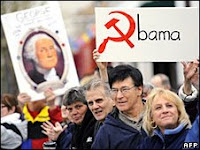
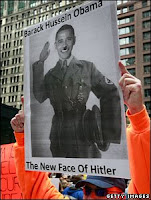
Obama’s election has also created partisan issues in the public sphere. After some of the stimulus legislation and bailouts passed, many prominent conservatives turned into alarmists, declaring that Obama is a socialist, communist, Muslim, and tyrant. The best example of this is the infamous Tea Parties, which had cropped up in response to the most recent economic legislation. Also, other social issues are inflaming conservatives, such as Obama’s reversal of the stem cell research ban. There are also some issues concerning gun control, even though Obama has done nothing in this area so far. In fact, many gun-happy Americans are buying as many weapons as they can, fearing that Obama is going to tighten gun control laws.

These social issues (and the all-important economic one) could be considered Obama’s fault, but he is not to blame for the alarmism and destructive criticism. I certainly understand the animosity towards bailouts and the inevitable tax increases. But the real instigators of the conservative anti-Obama movement are Republican rabble-rousers such as Rush Limbaugh, who, as we all know, “hopes Obama fails.” To put it bluntly, I have no sympathy for these destructive critics, just as I had no sympathy for those who blithely criticized George Bush without offering their own solution. However, many Americans are so infuriated and depressed with the economic situation that ruthless rhetoric sounds appealing.

What can we do about this issue? Unfortunately, I do not believe there is an easy solution. Americans are almost always going to disagree, and there are always going to be rabble-rousers on both sides of party lines. The best we can hope for is that Americans eventually grow tired of constant criticism and resolve to form their own opinions. But I’m not holding my breath. 

Monday, April 20, 2009

The new capitalism

For weeks, political pundits—both liberal and conservative—have been rambling on about their belief that Obama’s policies are going to create a new form of American capitalism, the likes of which have never been seen before. Conservative pundits have attempted to use this as a fear-mongering technique, spreading the dire warning that Obama is peddling socialism. Until now I have looked upon these claims with skepticism—after all, during the Great Depression FDR used socialistic policies to create consumerism, which became the biggest boost to American capitalism in all of American history. Though his policies where based around government intervention, at heart FDR was still an avid defender of capitalism.

But Obama is not FDR. Though both are using government intervention to save capitalism, it is becoming clearer every day that Obama does not plan to return to the status quo after the recession ends. I am not worried that Obama is a radical leftist who will destroy American economic freedom, but I think it is clear that we will not be returning to business as usual.

The first and most obvious sign of this is the G20 Summit. Not only did Obama wholeheartedly support the conference, but he supported mandates to regulate global trade, support the International Monetary Fund, and encourage government spending to end the global recession. This is a far cry from “Reaganomics,” where government is viewed as the problem, not the solution. Next, Obama has clearly stated his intent of guiding American industry and banking to prosperity. He demanded the resignation of a prominent auto executive, and has supported bailouts for banks and financial institutions, something even Democratic Presidents would be hesitant about.

These signs (warning signs, to conservatives) hint at a future paradigm shift in American economic policy. Clearly, Obama is planning to re-invent capitalism and the way America interacts with the world, probably through legislation.  

When will these changes occur? I don’t know for sure, but I believe it will be soon. Recall that immediately after the election Obama promised to “fix” the US economy and declared that the American people could hold him responsible for the result of his administration. What this means is simple: he acknowledges that if he can’t “fix it” in 4 years, he won’t be re-elected. However, it is probably impossible to bring us back to where we were in 2008 in 4 years, so many Americans will be unhappy even if Obama manages to slow or stop the recession (and decide not to vote for him again anyway). Also, Obama probably realizes that if things do not begin to turn around by 2010, the Democrats may lose their majority in Congress. Thus, I believe that Obama plans to implement his reforms sometime the next year or so. I am not sure exactly how or even what he plans to do, but I think we are going to see a major economic policy shift in the next few years. 

Will Obama’s reforms be for the best? This is a very difficult question, and we can only speculate. For one thing, it is obvious that the world is no longer going to depend on the US economy as much as it used to. Though this reduces our role in world politics, I believe it is for the best because our economic growth can no longer match that of developing countries. However, this economic influence may be crucial in the potential cold war against China, in which the US will probably be hard-pressed (once again) from preventing an authoritarian government from expanding its influence. As always, though only time will tell the real result of Obama’s reform. One thing is clear, though: we will see change soon, be it for the better or worse.  

Sunday, April 19, 2009

On the Obama’s dog

Today I would like to discuss a somewhat innocuous issue that has been all over the news lately: the Obama family’s new dog, Bo. The American media has eaten this story up, providing in-depth discussion of the dog’s breed and how it is being cared for. I would like to discuss the implications of the massive amount of media coverage for such a small, unimportant event.

At first, I was dismayed by the media’s treatment of this issue. With so many serious issues ahead of us, I looked with scorn upon the media’s focus on pointless stories such as this one. I feared the lasting effect that treating Obama like a celebrity could have. If the media continues to portray Obama as a celebrity figure, in the minds of many Americans he may become one, with disastrous results. Like other American celebrities, Americans might pay close attention to Obama’s personal like without caring about the important things he does. After all, he is the President of the United States, and we must not allow ourselves to get distracted from his policies by trivial details about he personal life. This concern is not entirely unfounded—former President Bill Clinton suffered from this celebrity syndrome, and by the end of his administration people no longer cared about his policies, only about his sex scandals. In fact, I recently saw a program on the History Channel that summarized the events during the term of each President. In Clinton’s segment, none of his polices or decisions were discussed, bu the Monica Lewinsky affair was talked about at length. To be fair, Clinton brought this upon himself—during his Presidential campaign Clinton tried to appear “cool” to appeal to younger voters, even going so far as to appear on MTV playing the saxophone on election night. 

However, I now believe that giving this story so much attention may be for the better. Though it distracts from the more serious issues, this is not as unfortunate as I originally thought. In times as grim as these, people need something trivial to take their minds off of their concerns, and the Obama family’s dog does just that. People can follow the plight of Barack’s Portuguese water dog instead of worrying about their own trouble, and escape (if only for a minute) from the harsh realities they must face. Indeed, this same concept of escapism is what makes the Hollywood culture so appealing to many Americans. Americans often nitpick over their heroes, as we saw with the unending praise for pilot Chelsea B. Sullenburger, who landed a plane in the Hudson River. Thus, as long as we avoid treating our President as a superficial celebrity, I see no problem with caring about what brand of dog food Bo is going to get. In this respect, too, I am more confident: if the issue is put in perspective, it is obvious that the President’s family getting a dog is far less celebrity-like than the President cheating on his wife. 

Thursday, April 16, 2009

Just for fun: the Time Cube

Today I would like to take brief moment to discuss something I have stumbled across: the "Time Cube" website. This site is the outpost of a certain Dr. Gene Ray, who invented a theory that supposedly explains everything. This theory (which I am having some trouble understanding) has something to do with the way Earth rotates, but because it goes against most religions and makes little sense most people have never heard of it. Dr. Ray (who signs all of his posts on this website "Gene Ray, Cubic and Wisest Human") claims that there is a giant conspiracy to prevent people from learning about the Time Cube, perpetuated by the education system. He suggests that if people disagree with the theory or even are unaware of it they will burn in hell (even though the theory has nothing to do with the afterlife at all, as far as I can tell. 

I found Ray's use of extra-large text aggravating, and his writing style is almost completely incoherent. After reading through the website, I came across a few points that Gene Ray makes that I would like to repeat. First, Dr. Ray believes that -1 times -1 is equal to -1. Don't ask me why. Second, this theory of the Time Cube somehow has to do with race relations. From what I gather, Dr. Ray is a bit of a racist, which he somehow justifies with the fact that Earth actually has four simultaneous days instead of one. Next, Dr. Ray believes that the Judeo-Christian God is homosexual. Again, don't ask me why. Overall, the website appears to be the best example of crank fundamentalism, pseudoscience, conspiracy, and incoherence I have ever seen. 

For these reasons, check the website out for yourself. If nothing else, it is hilarious to read. And if you figure out what Dr. Ray is talking about, please tell me—I’d like to know.

1776 in 2009 (part 2)

Nowhere is the issue of Americans longing for 1776 more present than in the issue of gun control. Gun-toting Americans see gun control laws as an offense to the men of 1776, who proudly carried guns and respected others’ rights to do so. However, regardless of whether gun control is justified, it is important to note that things have changed considerable since 1776, so the argument that “it’s what the Founding Fathers wanted” is not as valid as it seems.

The first difference between 1776 and today that relates to gun control is the fact that the reason people need guns is different. In 1776, society was more agrarian, less industrial, and more of a “pioneer culture.” In colonial times guns were not only helpful to deter crime, but also necessary for survival. Guns were essential for hunting, protection against robbers or invading Indians, and many other uses. Because of this, the way people viewed gun control in 1776 was very different from today: back then, t would have seemed far more tyrannical to take away people’s guns than it does now. 

Next, remember that in 1776 guns were very different than they are now. At the time of the American Revolution the best weapons were primitive flintlock muskets, and pistols could only fire one shot. Today, though, we have a wide variety of extremely deadly firearms, from handguns to high-powered rifles to automatic weapons. These make it possible for a single person to kill many other people quickly and easily, which is a concept that simply didn’t exist in the Founding Fathers’ time. 

However, there is one fundamental aspect of gun control that has not changed since 1776: gun control can act as a deterrent to crime. Similar to the way the fear of Mutually Assured Destruction (MAD) deters nuclear war, guns can prevent crime by acting as an equalizer. Today, pro-gun and conservative politicians often cite this effect as justification for less gun control.

So, what can this tell us about the issue of gun control? One thing is clear: preserving the right to bear arms simply because “the Founding Fathers would want it” is an absurd an invalid argument. So much has changed technologically and societal since 1776 that the principles behind the 2nd Amendment are radically different today. However, there is still some merit to the 2nd Amendment as a deterrent to crime. Also, from a libertarian perspective the problem changes only superficially—since libertarians believe that the preservation of civil liberties is the most important thing, the social issues surrounding guns are irrelevant. From are more practical perspective, though, these issues must be taken into consideration. Also, think about this: even if less gun control would deter crime, what sort of weapons should be banned? Should automatic weapons be allowed? What about assault rifles or explosives? I’ll leave it to my readers to decide for themselves.

Wednesday, April 15, 2009

Dialogue with an objectivist (part 2)

Today I will continue my discussion on my conversation with my objectivist relative. As the conversation progressed, the topic of public versus private education kept coming up. As a pure laissez-faire capitalist, libertarian, and objectivist, my relative opposes public education, stating that education should be left in the hands of individuals.

My argument against privatized education is this: without public (“socialized,” as he called it) education to act as an equalizer, society could develop into a rigid caste structure defined by the cost of this education. My reasoning is simple: education is obviously an integral part of any successful person’s upbringing—no matter how intelligent a person is, without an education they will only be able to rise so far. If education is privatized, a large percentage of the population would not be able to afford it, meaning that they will be unable to ascend in socio-economic status. However, the sons and daughters of the rich can afford education that will allow them to be “qualified” for many high-level positions, often regardless of skill level. Because it is impossible to break from this cycle, the result is a world defined by class, in which one’s greatest asset is rich parentage. Since this type of society is neither desirable nor equal (which is the objectivist reason for capitalism, since it forces people to be on equal ground and “earn” everything they have), it is obvious that public education serves society much more.

My relative’s refutation of this is that education is not the most important aspect of success—he stated that natural intelligence, which cannot be taught, is the most important. I find this view overly idealistic—as we see today, employers are not as skilled and gauging incompetence and stupidity as many think. Also, it is not true that wisdom is often more important the knowledge—most jobs require a person to be learned in a subject, regardless of how smart they are.

Additionally, the topic of ownership was brought up repeatedly. My “opponent” stated that the product of a person’s are always their property, and any government that thinks otherwise is oppressive and unjust. Indeed, he compared any form of government intervention or income redistribution (a term he used in a disgusted tone) akin to slavery. However, he did mention some odd points about the concept of ownership. First, he stated that only a person, not a group of people, can own a invention. At one point he went as far as to say that groups of people cannot invent things, only individuals can. (I quickly shot this down with numerous examples.) Additionally, he stated that it is impossible to force someone to think. This did not surprise me—it is one of the central themes of “Atlas Shrugged,” which I have read and discussed here before. I am not so sure of this one, either—I mentioned the Soviet Union as a counter example, but my relative did not accept this.

Overall, I was quite surprised to meet a hard-core objectivist in the flesh. I knew such people existed, as there is are several foundations and organizations devoted to the promotion of the objectivism. However, I was very surprised to find one who is so few “degrees of separation” away from me. Also, I should point out that this conversation did not change my views—I still regard objectivism as invalid and outmoded. 

Tuesday, April 14, 2009

Dialogue with an objectivist (part 1)

Tomorrow I will return to my discussion on 1776 ideals applied to 2009. Today, I would like to discuss something different.

This weekend I had an interesting conversation with one of my relatives, who happens to be a hard-core Randian objectivist. He owns an impressive library of objectivist literature, namely “every book Ayn Rand has ever written.” (Interestingly, he also possesses many of Zecharia Sitchin’s works. But that’s a discussion for another day.) This relative (who I will not name) and I conducted an interesting discussion on politics and economics, which I would like to talk about here.

First, I would like to delve into some of what he believes, which he explained to me at the beginning of the discussion. Though his views are not exactly the same as Ayn Rand’s, they are still in line with mainstream objectivism. For the most part, he sees government as a pestilence that causes nothing but trouble. Not surprisingly, he wants to see a very laissez-faire government that does not interfere in any industry whatsoever, including healthcare, food production, education, and social security. He believes that taxing a person and allowing that tax money to benefit another person is the equivalent of slavery—the worst thing in the world, he said, is “to be a slave to someone else’s need.” To him, any form of income redistribution or taxpayer-funded service is immoral and unjust. Next, he believes very firmly in the concept of ownership—he claims that that all inventions were created by people acting individually and of their own free will. From this he derives he equally strong views on ownership: anything a person owns is their property, and no one else (especially not the government) should be allowed to take it from them. Lastly, he is a libertarian in the traditional sense—he believes that “consensual crimes” and crimes in which only the person committing them is harmed should not be crimes at all. Overall, his emphasis was on “letting the chips fall where they may,” a very objectivist dogma.

I, on the other hand, argued for a government that was based around the idea of a social contract, in which all citizens must help society as a whole. Though I did not argue with his libertarian ideology (as I am a libertarian in the social sphere as well) I did protest against a society in which the prime movers are profit-seekers. (I am no fan of objectivism, though it does interest me.) Though there was no real conclusion to this argument, there were some interesting points brought up, a few of which I would like to mention.

First, I argued that a social-contract based government is necessary for survival, especially in today’s world. Consider what would happen to America if it had no standing army—within days it would be invaded and conquered. Though my objectivist relative eventually conceded that a military is necessary, he firmly stated that government has almost no other role besides protecting it citizens. He then reaffirmed his point that government should never force people to give what they have earned.

I then went on to argue that a world without government regulation or interference would be far less desirable than one with it. He persisted that if industry is run by profit-seekers, “at least we know where they stand.” However, I brought up one of the central points raised in Upton Sinclair’s “The Jungle”—rich capitalists can subjugate the world by maintaining a monopoly on the things people need to survive. (Unfortunately my objectivist relative had not read “The Jungle”, so the analogy was mostly lost. I suppose I shouldn’t have expected him to have read it—it is a socialist rag, after all.)

My relative then proceeded to reiterate that government should not force people to sustain other people who cannot earn a living by making them pay for things such as public education. However, I argued that the system he is proposing actually destroys the idea of equal opportunity rather than promoting it, especially in the case of education. (I will cover this in more detail tomorrow, as it became one of the main points of the discussion.)

Overall, this was one of the most interesting conversations I have had in a very long time, and for that reason I felt it was worth noting. It was very intriguing to talk with such a pure objectivist, whose ideas on what government should do are so radically different from everyone else’s. Tomorrow I will focus on the topic of education, which because one of the central themes of the discussion.    

Monday, April 13, 2009

1776 in 2009 (part 1)

American politicians often quote or mention America’s Founding Fathers to gain popular support. Most politicians will promise to stay true to the principles of 1776, as this usually reassures and comforts Americans about that politician’s agenda. Americans feel something of a longing for the ideologies of the time, and both Democrats and Republicans look back on 1776 with nostalgia. Indeed, the phrases “Framers of the Constitution” and the “Spirit of 1776” have developed an extremely positive connotation. However, many things have changed since 1776, and the world is not what it once was. Is the spirit of 1776 still applicable today?

The essential question it comes down to is this: are the Framers of the Constitutions’ visions worth preserving? At the time, the nation the Founding Fathers envisioned a nation steeped in the democratic spirit and in the protection of civil liberties, which was certainly in the public good. But should the US government still function by these same principles today, given the changes in technology and world affairs? Let me be clear—I am not suggesting that democracy and civil liberties are outdated—however, there are specific aspects of the early American government that are probably not applicable today.

The central aspect of 1776 that most Americans look back nostalgically on is the era’s supposed rugged individualism and limited government. People were patriotic and supported their country, but their government did not interfere with their lives. Today, though, a small, limited government would be extremely impractical. However, it is possible to pursue libertarianism and more civil liberties, restricting government’s role in the social sphere, but it a large, central government is almost indispensable. The reasons for this are obvious: a large government is necessary in order to provide for national security, fight crime, maintain the public school system, and so on. In this respect we cannot regress to 1776, but we can limit government’s role in our lives by reinforcing civil liberties.

Next, in early America there was a strong focus on state’s rights. This debate pretty much ended with the American Civil War, when the government became more federal and state’s rights were reduced. Thankfully few people are nostalgic for this part of early America, since the notion that states can blatantly disobey the federal government caused enormous problems. Today, states rights might result in a conflict similar to the Civil War, as the country is divided along partisan lines just as it was in Lincoln’s day.

Also, many conservatives are nostalgic for 1776 because it represented a time when America was more homogenous, and “problems” such as homosexuality were all but invisible. Personally, I do not find this aspect of 1776 very appealing, as I believe diversity is what makes America so special. (I have the same problem with people who are nostalgic for the conformist era that was the 1950’s, or for the Regan administration, which tried to accomplish the same thing. However, I suspect I am alone in this respect—according to a recent survey, many Americans do not believe that minorities (especially atheists, to my surprise) do not fit in with their “vision of America.”

Overall, though, one of the aspects of 1776 America that people long for is the era’s (supposed) rugged individualism. However, this lifestyle and mentality are no longer compatible with today’s society, except in some isolated, rural areas Though many people are justified in longing for a “simpler time” or an era of pioneering spirit, America has long since moved away from pioneer ideals.

Despite these differences, though, America is still not completely different from that of 1776. It is still a democratic nation (as it should be), and it still places emphasis on civil liberties (though there is some controversy over these). Though it is important to remember the spirit of 1776, we must always keep in mind that we cannot apply 200 year old philosophies to modern life. 

Next time, I will discuss this issue in relation to the issue of gun control. 

Sunday, April 12, 2009

Utilitarianism and libertarianism

Believe it or not, the radically different philosophies of libertarianism and utilitarianism are actually connected. Utilitarianism focuses on “the greatest good,” and the idea that the moral worth of an action is related to its overall utility. Libertarianism is seemly unconnected, as it deals with maximizing civil liberties and reducing government interference in the social sphere.
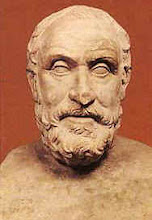
However, the two have far more in common than meets the eye. Enter “preference utilitarianism,” the belief that utilitarianism is best fulfilled by examining through the eyes of “preference satisfaction.” Because each person’s preferences are different, preference satisfaction is not one-size-fits-all—instead of emphasizing a single solution like classical utilitarianism, it is much more tailored to individuals.

This is where libertarianism comes in. In order to allow people to fulfill their own preferences, it would be more desirable for a society to maximize civil liberties. This way, instead of the much-criticized draconian or fascist brands of utilitarianism, people are allowed to pursue their version of happiness in their own way.

But where does it stop? Should people be allowed to harm or kill others if they so desire? Should certain people be allowed to possess nuclear weapons if that is their version of satisfaction? On a large scale, it is obvious that one person harming multiple people is unethical according to utilitarianism and should therefore be prevented. On a smaller scale, though, this becomes a tricky question in utilitarian ethics. Consider the following example: Person A is harming Person B, which is causing Person A the same amount of happiness as it is causing Person B unhappiness. Because the two cancel each other out, intervention would seem to be unethical according to utilitarianism. Act utilitarian would probably state that even though it is in the common good to prevent people from harming others, the particular scenario I mentioned is ethically neutral. Rule utilitarians, however, would most likely consider the scenario morally wrong (assuming that “don’t harm others” is one of their ethical rules). Even so, it is a thorny problem that highlights the consequences of utilitarian ethics.

Additionally, preference utilitarianism—and particularly the libertarian version of it—are far more “less than perfect” than the idealistic vision flaunted by classical utilitarianism. Though this may deter classical utilitarians (especially act utilitarians) from supporting it, utilitarianism has always been criticized for being to utopian to be realistic—perhaps libertarian utilitarianism is a reasonable middle ground. Also, utilitarianism is often not egalitarian because of the repugnant conclusion—however, libertarianism corrects this, as libertarianism focuses on equal civil liberties. Though it diverges from the traditional definition of utilitarianism, I believe that libertarian preference utilitarianism is a viable and practical way to achieve “the greatest good.”