Sunday, December 14, 2008

Cronyism, government, and Robert A. Heinlein

"At one time kings were anointed by Deity, so the problem was to see to it that Deity chose the right candidate. In this age the myth is 'the will of the people'...but the problem changes only superficially."

The cynical quote above is from my favorite novel, which, as I have talked about at length before, is Robert A. Heinlein’s The Moon is a Harsh Mistress. The quote is essentially saying that democracy is not as romantic or even as valid as it seems—it is just as prone to being corrupted—or even completely rigged—as autocracy. In today’s post, I would like to talk about whether this is a valid statement, and if yes, what the implications of it are.

In the context of the novel, Heinlein is commenting on libertarian revolution. This quote is one of his not-so-subtle hints at why libertarian revolution is not as romantic or idealistic as it seems. (Despite the fact the Heinlein himself was very libertarian and opposed to big government, he did not have an idealistic view of anarchy or a libertarian society; he simply thought it was slightly better than federalism.) History definitely backs his point up here—today, historians have admitted that even the American Revolution was caused by the elite and controlled by the elite throughout the course of the Revolution and Revolutionary War. Indeed, cronyism is more prevalent in our history and in human history than we would like to think.

But if we look at the quote on a larger scale by looking at democracy as a whole in this light, the answer is quite different. Though corruption still exists in modern politics, the Western tradition of representative democracy has created a larger “ruling class,” which has diluted the cronyism inherent in the early American government. This makes it much harder for a select few to control the entire government. Though cronyism probably occurs in the White House, the balance of power in the US government prevents this from spreading to Congress. Also, despite the fact that both the Democratic Party and the GOP are controlled by a few individuals (not the same ones, of course), the fact that remain neck-and-neck in American history prevents this from spreading to the government. Finally, I should add that democracy itself actually prevents cronyism, in direct defiance of the quote. Though I often criticize the American system for not educating US citizens as much as it should, we are still immensely well informed, at least compared to the people of developing Asian nations such as India, China, or Myanmar.

However, there is still a strong argument for cronyism: the control and influence of the media in modern politics. There can be no doubt that the media, particularly the news media, has an enormous effect on the way Americans think; as American news continues to ignore world affairs and politics, the average American’s knowledge of these issues decreases proportionally. The media’s recent fixation with celebrity culture has prompted many Americans to focus on it as well. However, as I have mentioned before in “Culture: the dark side,” the media must pander to what the American people want to hear, and they are often unable to promote their own agenda because they must compete with other news organization (with some exceptions, of course). Also, it is unlikely that the media is under the thumb of the government, since they have been very critical of the government’s actions throughout the last few decades. However, the statistics cannot be ignored: the news media has been influenced by some traces of “liberal bias.” Even so, our media is far from being dominated by the elite for the purpose of spreading propaganda; this argument has very little validity.

Essentially, Heinlein has put his finger on the irony of cronyism in a democracy or a democratic revolution. In some cases, government can be run better by a few people than by the populace—but it defeats the purpose of the revolution in the first place. 

As a side note—the fictional character who says this quote in The Moon is a Harsh Mistress is a rational anarchist, which explains why he is so cynical and critical of government. 

Saturday, December 13, 2008

Guns or lawyers

In the last few decades, it has become common for Americans to lash out at the legal system; politicians and especially lawyers have become targets of contempt and scorn. Though practicing law or being in politics are prestigious careers in the US, many Americans look down on lawyers or people who work for the government. However, this anti-lawyer bias is entirely unjustified, as I am about to show.

Though some Americans probably believe that the world would be better without lawyer, the truth is exactly the opposite. Before federal legal systems or in pioneer societies, government did not regulate how justice was carried out. The result? Dueling. As history buffs may remember, in the 1500’s-1800’s people carried dueling pistols with them, and nobles had more baroque, ornately decorated versions of the same. But these pistols were not simply ornaments—dueling was the common practice to settle disputes. As federalism began to increase and pioneer societies began to wane, courts began to replace dueling (though the practice did not end until the 1800’s; even President Andrew Jackson was a dueler, and he even participated in a duel during his presidency). My point is simple: which is better, dueling or a legal system? Though a few rugged individualists would boldly assert their support for the former, most Americans support the latter. When we decided to settle disputes by seeking the truth rather than with guns, we took a step towards a better, more advanced civilization, which lawyers have helped us reach.

Why, then, do we enjoy verbally abusing these people if they do so much for us? The main reason is the anti-intellectualism that is deeply ingrained into American culture. Lawyers have become grouped in with the “elite,” which causes many Americans to fear and hate them.  Also, some of this bias comes from people’s negative personal experiences with the legal system. For example, if one person loses a court case, that person will probably have some pent-up choler, which can cause this irrational hatred of lawyers and politicians. Since this kind of bias is very contagious, it does not surprise me at all that many Americans have this anti-lawyer bias even if they have never been in court themselves. 

What can we do about this? Very little, I’m afraid. There is no practical way to rid the US of the anti-intellectualism that has been imbedded in our culture for decades. Fortunately, this is not a very important social issue compared to many of the others I have discussed on this blog, so I am not too worried about this one. However, I hope that all Americans eventually come to realize what the legal system does for them, and give lawyers the appreciation they deserve. 

Friday, December 12, 2008

The Mugabe dilemma

Although the American news has neglected to cover it, Zimbabwe is currently in chaos. Over the past few weeks, they have been plagued with a cholera epidemic, and most of the country is in poverty. (The BBC News, though, has not shied away from the horror; they have a story on Zimbabwe almost daily.) Who is to blame for all this? Most fingers are pointing at Robert Mugabe, the current President of the country. Some have even gone so far as to call him “the next Hitler.”

The question I would like to bring up today is this: what, if anything, should we do about this? Mugabe is clearly not good for the country—but is it our responsibility (or the UN’s) to do something about it?

I don’t want this to turn into too much of an imperialism debate, which is why I chose this issue, where “right” and “wrong” are more clearly defined than in other instances such as Iraq. Even so, I will give my opinion, but I will leave it up to my readers to decide for themselves. 

Right now, Mugabe is undoubtedly one of the worst leaders any country has ever had. He has completely ignored the cholera outbreak, and, in other instances, has ignored human rights issues just as easily. Though other nations, such as Kenya, have called for his resignation, the African Union has announced that they refuse to do anything about him.

But what if someone does intervene? If Mugabe’s regime is destroyed, Zimbabwe will be in chaos. Huge amounts of troops will be required to protect the people of Zimbabwe against radical factions who will try to take power after Mugabe’s regime is destroyed. Huge amounts of money will be needed, too, to not only fund the coup but also stop the cholera outbreak. And, of course, it is none of our business to begin with.

What do I think? In this case, I do believe that intervention is needed. Mugabe is clearly a tyrant who needs to be deposed, the sooner the better. But I do not think that the US or the UN should get involved directly. What we need to do, instead, it work through the AU. There is no reason why the West should have to be Africa’s police force, but we cannot simply abandon them. If we work to make the African Union more like the EU, they will be able to prevent dictators such as Mugabe. By giving the AU its own police force and convincing African nations to give them more power, we will not have to get involved in African affairs nearly as much as we do now. Not only will this benefit Zimbabwe, but it will positively affect African affairs as a whole for the next few decades.

However, I leave it up to you. Is intervention justified in an extreme scenario such as this? And do you favor indirect intervention, as I do, or a more direct invasion? 

Thursday, December 11, 2008

Those greedy executives...

I would like to interrupt the series on alternative justice systems for a day or two, since I have found some more pressing issues to talk about. Today, I would like to briefly discuss the automakers bailout, which is obviously a very important current event. For today, whether I support the bailout or not is irrelevant; what I would like to discuss is the way we view the executives of the Big Three automakers, and why our view is unjustified.

When the Big Three appealed to Congress, they clearly did so in bad taste. One of the executives offered to “work for $1” next year, despite the fact that his salary is already seven figures. None of the companies had a concrete plan, except that they wanted government money. And so on and so forth. The point is, it was embarrassing.

However, though I have little sympathy for them, I think we judged them incorrectly. In America, we often want our political and celebrity figures to be innocent, morally superior people (though we do not always expect this). Over the past few weeks, it has been the same with these executives: we look appalled whenever they show any outward signs of elitism or greed. But this is only because we forget who they are and what they do. Simply put, they do what they do to make money. They have never pretended to care one whit about the country as a whole, and most of them probably don’t. For some reason, we hold them to the same standards as our public officials, despite the fact that they are clearly out for themselves.

To put it in perspective: we call politicians corrupt when they serve their own interests, not the interests of the general public. But it is the job of an executive to serve himself; this is how they got to be where they are in the first place.

To summarize: I am not sympathizing with the automakers in any way. However, I am simply critical of the way we view them, and I think we should not be surprised at their motives. Unfortunately, I do not have time to elaborate on the subject today, but seeing as this is such a controversial issue I will probably revisit it sooner or later.

Wednesday, December 10, 2008

Law and order (part 3)

In this post, I would like to delve deeper into the moral and practical arguments behind some of the systems I have described in the previous two posts on this subject.

The first point I would like to bring up is one that I touched on briefly in “Law and order (part 2)”: the death penalty. In a pragmatic justice system (one that works towards reforming criminals), the death penalty would only be carried out on an individual who could not be rehabilitated. However, in today’s justice system the death penalty does more than just punish those who have committed heinous crimes; it also serves to deter people from committing crimes in the first place. In a system such as the rehab system, there is no fear generated by the system to keep people in line. I am not sure if I really have an answer to this problem—the situation very much like give-and-take. The current revenge-based system causes unnecessary pain, but the rehab system does less to prevent crime. As far as I know, there is no way to prevent these inconveniences in either system.

There is another point I think I have left out of my previous posts: Is there an psychological illness associated with every crime, and if yes, does this mean that all criminals can be treated and rehabilitated by the “rehab” option? This question has some serious implications to philosophy and sociology. It essentially means that if the science of psychology improves, we will eventually be able to gauge a person’s metal ability or desire to commit a crime (before they have committed one) and send them to prison or rehabilitation simply on the basis of this intent. This raises enormous moral and practical questions. First, it means that the universe is essentially deterministic (at least to the point that it affects us). This would mean that the BNW system is morally justifiable, and the Heinlein and rational anarchist systems are unjustified because responsibility does not exist in a pre-determined universe.

On a similar vein, I would like to bring up one of the main themes of the book and movie Minority Report: Is it justifiable to send people to jail or rehab before they commit a crime as long is there is probable cause that they would commit it anyway? If the universe is deterministic, the obvious answer is yes. However, if human beings do possess free will, the situation is very different. This also raises another question: is it better to treat society as if it is deterministic even if it is not (particularly in terms of a justice system)? Today, we treat society as though it has free will, and our justice system is clearly a reflection of that. In terms of the systems I have discussed, this is something like the BNW system compared to the rational anarchist system: the first completely tramples over free will, but the second trips over itself and creates numerous practical flaws because it’s main goal is to protect free will and personal responsibility. Which is more practical, and which is more moral? Neither is very practical, but the BNW system is probably more practical than the rational anarchist system because it does not have to protect personal responsibility. In terms of morals, either decision creates a huge problem if we guess wrong: if we choose BNW but people do actually have free will, we have committed a huge moral mistake. On the other hand, if we choose the Heinlein system or rational anarchy and the universe is deterministic, we will have created a lot of unnecessary unhappiness. However, I would like to throw the question out to my readers: Is protecting free will worth the problems it causes, or is it better to treat society as if it is deterministic?

This brings me to the next point I would like to make, which has to do with the rational anarchy system. Since the government is not getting involved in the justice system in this kind of configuration, the exact purpose of the system is not clearly defined. In fact, what could happen is that different individuals with different ideas of justice could go about punishing people in any way they see fit (in fact, this did happen in the Old West). The result: chaos. This is a huge blow to the rational anarchy system; keep this huge flaw in mind when thinking about the points in the paragraph above.

In the next post, I will talk about justice systems in relation to the concept of fairness.


Tuesday, December 9, 2008

Law and order (part 2)

This is my second post on the topic of how the justice system could be better organized. Last time, I discussed three alternatives to the current justice system.

I now realize that every system I mentioned last time criticizes the revenge-based justice system currently in use almost everywhere around the world. However, it should not be taken for granted that this concept is inherently flawed, Because of this, the first thing I would like to bring up today is the conservative response defending the revenge-based justice system.

Defenders of the prison system/revenge based justice would argue that corporal punishment can put criminals “back on course” just as well as medicine or the “rehab” option. This is because, the argument goes, all human beings have moral sense, which can be cultivated through punishment, like the way puppies are trained not to “use the bathroom” in the house. The second part of the argument is mostly based on a theistic belief, so I will ignore it for now.

However, this claim can be mostly refuted. Criminals can be rehabilitated with medicine or help from the psychiatric community, which is one of the arguments from the “rehab” option. Though this science has not been perfected, it is at least as good as plain old punishment. Thus, the pain of punishment is not necessary. Also, though I will not refute the claim that human beings have moral sense, but not all forms of insanity are simply confusion—in many cases, people are actually psychologically damaged. In those cases, mere punishment is not enough to help them, since their moral sense is damaged. Thus, punishment for the purpose of cultivating moral sense is not all it is cracked up to be.

There is also another element I would like to add into this equation, the death penalty. This is an aspect of the three options I talked about last time that I did not delve into, but I feel it deserves mention. In terms of the BNW option, the death penalty would only be used if an individual refused to conform to society, such as if their conditioning failed. In the rehab option, it is much the same—it would only be used if a person were deemed incurable of their metal illness. However, this goes against the spirit of the rehab system, since it is geared toward saving lives and protecting people from pain. In terms of the Heinlein option, the death penalty would never be invoked, since Heinlein did not believe the government should be trusted with such power.

Also, I promised to discuss more alternatives to the current justice system, so here they are:

Jeremy Bentham’s “panopticon”: according to Bentham, an English philosopher, all convicts should be placed in a prison that is designed so that all of the prisoners believe there is someone watching them. Because of this, says Bentham, the prisoners will always behave correctly because they think they are constantly under surveillance. There are few practical problems—Bentham even included architectural drawings of how to build such a prison. However, there is one overriding issue: Will it actually work? I doubt it. We have this sort of a concept even now, and it is very ineffective.

Next, the “rational anarchist” option: abolish any form of justice in terms of the State, but give people the right to administer justice themselves in any way they see fit. As alien as this idea sounds, it has occurred many times in almost all pioneer-type societies. For example, in the Wild West, vigilantes would take action against criminals themselves. Like the Heinlein system, this one is personal responsibility to the extreme, and government has basically no role here. In pioneer societies and small societies, this probably works very well. There are enormous practical problems with this system on a large, scale, though. In counties with a weaker police force, such as Mexico, we can clearly see what happens when government does nothing—no one stands up to stop crime.

There is something else to discuss here, that relates to the “rational anarchist” system and the Heinlein system: Personal responsibility. Ignoring the flaws in both these systems for a moment, look at the purpose they are trying to achieve: to administer justice while not impinging on personal responsibility in any way. The Heinlein system does this by not forcing a person into treatment, and the rational anarchist system does this by abolishing the role of government in creating justice. In my mind, this begs the question “is it worth it?” Is personal responsibility such an important goal in a society, and should we sacrifice practicality for it? Your answer will depend on your political view.

Finally, I have a question for my readers, which will probably relate to which system they agree with (at least morally). The question is this: What is the definition of the word “justice” on a moral level? In part 3 I will explore this question, along with some of my other thoughts on this topic in general. 

Monday, December 8, 2008

Law and order (part 1)

Though we often forget it, our current justice system dates back to the Bronze Age, with Hammurabi’s Code “An eye for an eye.” Since then, revenge-based justice systems have dominated the world. This is also reinforced by our non-deterministic view of the universe in general—we treat society/people as though they have free will, even if they really do not. Today, our justice system in the US suffers moral problems because of this along with practical problems because of some of the system’s other aspects. In this post, and possibly a few following it, I would like to discuss alternative systems that would better suit our needs.

The first alternative I can think of is the “Brave New World” option: treat society as if it is deterministic, and pay no attention to personal liberties, privacy, individualism, or civil liberties (because such things are meaningless in a deterministic universe). In BNW, everyone is brainwashed, conditioned, and on hallucinogenic drugs to keep them happy 100% of the time, and there is no crime whatsoever because of this. There are actually a few positive things I can say about the system. You might think that this kind of setup is practical but not moral, but the truth is exactly the opposite, at least in terms of non-theist moralities. The BNW system does prevent crime, and it ensured the most amount of happiness for the people living in it. This makes it superior to other moral systems if judged on the basis of creating happiness (which may be the only way of comparing two moral systems without challenging the religious beliefs of either one). However, despite the BNW system’s moral superiority, it has many practical problems. It creates a populace that is unable to live in conditions beyond those they have been prepared for. Thus, should anything happen to the centralized government, the society would collapse and almost everyone would die. The author of BNW, Aldous Huxley, highlights this enormous flaw by showing how brainwashed people cannot perform basic survival necessities such as finding potable water or comestibles. Also, the BNW option is wildly impractical, as it takes a long time to carry out, and it represents the kind of thinking that the Western world has always opposed.

The next alternative is the “rehab” option. Supporters of this idea believe that the prison system should be abolished and replaced with clinical rehabilitation centers. The moral justification for this is that the current definition of “justice” is very similar to revenge, which is undesirable in the modern world. Instead, according to the theory, our justice system should work to make criminals better people ad help them return to society, not punish them, since punishing people serves no moral purpose. (Like the BNW option, the rehab system also has a deterministic slant to it.) On a practical level, supporters of the rehab idea will highlight every flaw in the prison system and explain how this will be fixed by the rehab system. This idea also has some genuinely good reasoning behind it, but there are some practical flaws in it as well. First, the science of psychology has not yet risen to the point where this can be entirely effective. Psychologists can be fooled—and therein lies one of the largest problems with the system. (Judges—who would be psychologists—could be tricked into exonerating a person who is actually guilty and psychologically unbalanced. Indeed, many convicts are probably able to answer questions with sang-froid  and poise when conditions require it.) Next, this system would not fix problems such as prison overcrowding, as supporters of the theory claim. In spite of all this, I agree with the original thesis: a justice system based on revenge, as ours is, serves little moral purpose (punishing a person to make them a better person does not count—this is a pragmatic and practical reason, not a moral one).

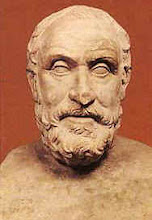
The next option I can think of is the “Heinlein” option, which is a system invented by (surprise) the science fiction author and philosopher Robert A. Heinlein (pictured). This system also denounces the idea of having a justice system based on revenge, but the solution here is a very different from either of the two above. Rather than treating society in a deterministic way, the Heinlein system protects privacy, free will, and personal responsibility to the nth degree while still working to reform criminals rather than punish them. This is achieved as follows: Upon being convicted of a crime, a criminal is given two options: to submit to psychological treatment (like in the “rehab” option) or to leave the society. They may allow themselves to be exported to other countries if possible, or they may enter Coventry, which is a large land area set aside for the purpose of housing those who refuse treatment. Inside of Coventry the government does not intervene in anyway, and no official government exists there. If a person wishes to leave, they must go through the “rehab” program before they are re-admitted into society. The main point is that even if the state finds the convict insane, he or she is still given the two options—thus, person responsibility is assumed at all times. However, there are practical flaws here too. Firstly—who is going to provide the land for Coventry? This sounds like a silly question, but I doubt any American would be willing to cede their land to the government, and it is highly unlikely that a large amount of people concentrated in one area would. Next, any problem associated with the “rehab” option can also apply to this one. Finally, there is the issue of what happens inside Coventry itself—governments, factions, and even terrorist groups may form, which may threaten the people outside of Coventry as well. Also, excessive force may be required to ensure that people stay there.

That’s all I have time for today. Next time, I will explore this topic a little more. 

Saturday, December 6, 2008

China: a ‘threat to democracy’?

For those who have been following my last few posts on culture and the debates that have ensued on their comments pages, I am sorry to say that I am going to change tracks a bit, at least for now. There are a few political issues I would like to discuss. However, I promise I will eventually return to the topics of culture and cultural manipulation, as they are far to important for me to only write about one or twice. 

I recently read an article on the BBC News website about how China’s anti-democracy stance will affect the 21st century. The article cites Lord Chris Patten, a famous British ex-politician, who stated in his new book, “China is a threat to democracy.” According to Patten, this is because China has not taken a hard line on humanitarian issues in neighboring countries such as Myanmar. Because of this, says Patten, China sends the message to other nations that it is acceptable to be “authoritarian, illiberal, proto-capitalism.”

I have to agree with Patten’s thesis. Asia has no binding contracts between nations the way the EU has, so if China does not force other Asian nations to protect human rights, nothing will change. Though the Chinese hold a supercilious attitude towards the nations surrounding it, they do little to help these nations. China’s imperialism also worries me—China have been gradually forcing its will on cultural groups that are entirely unrelated to Han China, including Tibet and Qinghai. If this troubling pattern continues, China may re-emerge as a conquering empire. Also, I think that the Chinese relationship with the government of Sudan will continue to be a serious political issue in the years to come.

What can we do about it? Unfortunately, very little. Usurping the Chinese government is not an option, since globalization demands that the Chinese government and economy must remain stable. (Also, there are some moral issues with this, of course.) Nor will acting sycophant towards the Chinese make them listen to us any more than they do now. What we must do instead is take a hard line with China, and have the UN impose sanctions on them if necessary. Since China is most likely going to be the most powerful nation in the world in a decade or two, now is the time to get them on the right track. Indeed, this parvenu of a nation must be sent on the road to democracy, or else all the US has been working for will be lost. 

Thursday, December 4, 2008

Culture: the dark side

In several previous posts (1) (2), I discussed how culture could be altered and manipulated to make it provide more happiness for the people it serves. I explained that culture should serve people, not people serve culture. I also discussed how to separate culture from religion, and why this is the right thing to do.

Today, I would like to talk about the “dark side” of this—culture being manipulated for malicious reasons.

I can think of numerous historical examples of this. The most ancient I can think of is the Chinese emperor who built the Great Wall, whose name I cannot remember. He organized the burning of Confucian texts and banned Confucius’s philosophies from China entirely. It apparently worked, considering the fact that he was able to stay in power long enough to build on of the world’s largest construction projects. Next, Napoleon was a master of cultural manipulation. In Egypt and the Middle East, he used Muslim priests to convince the people that he was in fact a hero, not a conqueror. Furthermore, during WWI, WWII, and the Cold War, propaganda in the US completely changed the face of Americanism. The propaganda made it unacceptable to criticize the government, and those who did were not only punished by the government but also shunned by society. It is almost impossible for the people of those eras to imagine today’s anti-Bush literature—in their time, such books could only have been published surreptitiously.

Even scarier than these historical examples, though, is the thought that this might even be happening right now in the US. I suspect that there might be some validity to this idea, especially because of the influence the media has over the US. Media executives claim that the programming they air is based on view ratings, so they are supposedly not influencing it in any way. Though this makes sense, I doubt this is entirely true. Consider reality television, which is a relatively new invention. Before the first reality show aired, almost no Americans had a desire to see that kind of show because they had never even heard of the idea yet. After the fact, though, Americans were suddenly hooked on this new idea. Thus, the idea to air reality TV couldn’t have come from ratings or statistics. My point is that the media clearly does influence us, even though we do influence it to some extent. And, because the media clearly influences us, there is defiantly some tampering with how we think. Fortunately, this does not worry me too much because the media’s main goal is to make money, not pursue some other political agenda (though for some networks this is clearly not the case).

I would also like to add a parting shot at organized religion that relates to this topic. In history and even today, religions have existed that advocate the destruction or forced conversion of other reasons. This happens for two reasons: a) this is part of the original “draft” of the religion and is inherent in it, or b) because some political or religious figure added this in somewhere down the road. What does this mean? Point “a” means that not all religions are inherently neutral or good, which a naïve few do-gooders and altruists still believe. Point “b” means that religions are also subject to this cultural manipulation, which should have been obvious anyway from the historical examples above. The reason I bring this up is because of how often point “b” occurs, meaning that religion is dangerous because it has such a strong hold on culture, thus making it a far too easy target for negative cultural manipulation.

That’s all I have time for today; you are going to have to wait for me to write more on this subject. Next time, if I am not plagued with the ennui that comes from a flow of mindless work, I will go into more detail. Unless, of course, you think I am garrulously rambling on about nothing, in which case you will have to suffer through a few more posts on this topic. 

Tuesday, December 2, 2008

Why I am not an American

Though I reside in the US, I am by no means a part of it culturally. For the purpose of entertainment (mine and yours), I would like to tick off the list of reasons I am different from the standard middle-American culture.

--I hate American news. Though a few US newspapers, such as the New York Times, are passable, I cannot stand any of the US news programs on any of the major networks, from that liberal rag MSNBC News to the sickeningly conservative Fox News. Instead, I read the BBC News online and watch the BBC World program when it is occasionally on PBS. Why? US news tends to be sensationalist, lacking in content, biased, and overly simplified. Graphics and subtitles dominate most of the news programs, and world news and politics are often scrapped in favor of human-interest stories. 

--I hate American sports. Baseball, American football, and basketball bore me, and I have always thought NASCAR to be a utter waste of time and money. However, I follow European Pro-Tour cycling fervently, and I am also a fan of Indonesian and Malaysian professional badminton. In fact, I am quite proficient at the sport myself, and I very much enjoy playing in a local league that consists mainly of Indonesian, Malaysian, and Indian immigrants, some of whom used to play professionally.

--I am against American culture in general. In many previous posts, I have questioned the US’s current moral system and culture. As I have said before, I do not appreciate our culture and morality being hijacked by Christian fundamentalism The fact that a significant portion of or population still wants creationism taught in schools is simply frightening to me, as is the fact that Proposition 8 just passed in one of the most liberal states in the country. I would prefer a much more secular society, such as the UK. Additionally, as I have stated before, some of the social constructs I would like to include into our culture would be considered vulgar, blasphemous or imprimatur by many Americans. 

--I disagree with the American philosophy of economics. I have always said that the European belief of heavy regulation would benefit us greatly—now, as the global recession looms, economists are predicting the European system, which they have previously written off as “a fossil,” may be better suited to the current crisis. 

--I hate the American media. Sadly, our radio, television, and Internet media have all been stricken by the same disease: sensationalism. American television—news and other programming—often simplifies or confuses political issues. Furthermore, almost all US television of it has lost most of its intellectually stimulating aspects, which makes it far less interesting to me. Because of this, the only American shows I watch are NOVA (a PBS science show), a few shows on the Discovery channel, and a sitcom or two on occasion. I do enjoy watching television in general, though—as I said before, I watch the BBC World News, and I am addicted to my favorite television show of all time: Rod Serling’s The Twilight Zone. (Unfortunately, it is only on twice a year, in the form of two “marathons” on the Sci-fi channel on July 4th and New Years Day.)

I suppose I am not being fair to all of America—the ideological half of the country that I live in is far more liberal than the other half—it is the most diverse and cosmopolitan part of the US, and many people here share my sentiments. However, it is far smaller that the other side of our culture, and it is clearly the cultural minority. The other America, though—the place of Sarah Palin, NASCAR, and fried doughnuts—I feel little connection to.

But don’t get the impression that I dislike America—I love my country, and I have a lot of respect for the ideals it represents. However, I feel that America is culturally divided, and I do not represent the majority of American culture in any way. 

Monday, December 1, 2008

On "Anthem"

The other day I read Ayn Rand’s “Anthem.” Like all of her other novels, it was little more than a piece of Objectivist propaganda. Nonetheless, I would like to talk about some of the concepts discussed in the book.

The basic premise is that society has become so collectivist that people have forgotten the word “I.” The main character, however, wishes to be individualistic, so he runs away from society and lives by himself in the woods. The last chapter, which is the actual anthem described in the title, is about his discovery of the words “I” and “ego.” The book scathingly criticizes the fictional collectivist society and praises individualism. In the introduction, Rand likens any kind of conformism or collectivism to slavery.

I found the whole thing somewhat reminiscent of 1984 or Brave New World, since the lesson each novel is trying to teach is very similar. Here, though, the lesson is more extreme—BNW speaks out against consumerism and conformism and 1984 against fascism and false revolution, but Anthem seems to be against any kind of government whatsoever.

Rand’s description of a collectivist society, though chilling, seems very unrealistic to me. The society is technologically backwards, which seems a bit ironic, since more advanced technology could be used to achieve a great amount of control. However, examples such as China show that Rand may be on to something.

The whole concept of forgetting the word “I” was very intriguing to me. I could not help thinking of it as a thought-experiment to prove the Saphir-Whorf hypothesis (linguistic determinism). 1984 explores a similar idea, but in less detail—the government plants to use the “newspeak” argot to control how people think.

I would also like to take a moment to talk about Objectivism in general. Here is a short dossier of Objectivist ideas:

Metaphysics: Objective Reality, or the idea that reality exists independently of the human mind. Objectivism states that the purpose of the senses and consciousness is to perceive reality, not create it.

Epistemology: Reason, reason, and more reason. Rand rejects mysticism and skepticism, and it holds perception, combined with reason and rationality, is sufficient to achieve knowledge. 

Ethics: Objectivism rejects any kind of determinism, but it also rejects the concept of a soul. Instead, it states that human beings have a conscious mind that possessed free will. In terms of ethics and morality, Objectivism holds that the only concrete form of morality is that which is required to ensure man’s survival, not only physically but also as a rational being. Beyond that, the only morality, according to Rand, is self-interest. In other words, man is an end, not a means. I also suspect that Rand has a personal bias against moral systems that stress altruism, since she highlights this point in the book’s introduction.

Politics/Government: Objectivism states that a concept such as “the State” has no moral value whatsoever. Rand also argues that no man can force his values on another, and physical force is discouraged, except in self-defense. Man’s political purpose, according to Objectivism, is to interact with others independently, like traders. Laissez-faire capitalism is also strongly encouraged, since it allows people to interact in this way. Thus, Objectivism is strongly against any kind of collectivism or socialism.

Naturally, I reject most of these claims. The whole philosophy is based on a few assumptions, and since I am a skeptic I do not agree that these assumptions are true. However I can see how Rand came up with this philosophy, since she grew up in Soviet Russia—the invidious Russian political system angered many during her time.

This is probably not the last time I will be talking about Objectivism here, as I look forward to reading more of Ayn Rand’s books.